Understand Any Substack Post — Explained in Your Language

Your Substack inbox is full of long, idea-dense essays and expert newsletters you mean to read but never quite finish. Most reading tools just narrate the words and leave the argument as tangled as before. CastReader Quickread reads the post, explains what it's actually arguing in the language you know best, and marks the key points with a moving pen as it talks — so you get the thesis, not just the audio. Free to start, no sign-up.

Free to StartNo sign-upInstant40+ languages

Want to understand a Substack essay written in another language? CastReader explains it in your own language — a spoken explanation, not a word-for-word translation, with the key sentences marked on the original. Open the newsletter, choose your language, and listen. Free to start, no signup.

SPor qué leemos · M. EllisExplaining
Spanish essayEnglish

Casi todo lo que leemos en internet lo ojeamos, no lo asimilamos. El cerebro trata la pantalla como un lugar para buscar palabras clave, así que el circuito lento de la lectura profunda casi nunca se activa. Pero es en ese modo más lento donde de verdad se forma la comprensión. La buena noticia es que leer en profundidad es un hábito, no un don. Se puede reconstruir, un párrafo sin prisa cada vez.

Thekeywordonlinewemostlyskim,notabsorb.

1/51.0×

A long essay in a language you barely read, explained in yours — with every key point marked right on the page. Not translation: explanation.

Cross-language40+

Substack, Medium, any foreign essay — Quickread explains it in the language you know best, same pen, same mark-up.

English中文日本語EspañolFrançaisDeutsch+40 more

Narration Reads the Essay. Quickread Tells You the Argument.

Plain text-to-speech recites a Substack post and stops there. Quickread does what a narrator can't on a 4,000-word essay: it reads the piece, works out what it's arguing, explains it in your language, and points at the load-bearing claims while it speaks.

Get the Argument, Not Just the Audio

A normal reader will happily narrate 4,000 words of dense analysis and leave you exactly as foggy on the thesis as before. Quickread reads the post, works out what the writer is actually arguing, and talks you through it — compressing the buildup, surfacing the one paragraph that carries the claim, and connecting the points the essay assumes you'll join yourself. For the kind of Substack that buries a sharp idea under a long windup, you get to the point in a fraction of the time, then decide whether the full read is worth it.

Read a Newsletter in Any Language, Understood in Yours

Substack is global — some of the best writing in your field is published in a language you don't read fluently. Quickread explains a foreign-language post in the language you actually think in: not a stiff machine translation of every word, but a real explanation of what the writer means. Set your explanation language once and every newsletter in another language comes back to you in it, with the original text on screen and the key phrases marked, so you can follow thinkers you'd otherwise miss entirely.

Cut Through the Jargon in Expert Newsletters

The newsletters worth subscribing to are often written by specialists for specialists — the macro analyst, the biotech researcher, the legal commentator — and they assume vocabulary you may not have. Quickread unpacks the terminology as it explains, telling you what a term means in context instead of leaving you to look it up and lose your place. You stay subscribed to writers above your current level and actually understand them, week after week.

A Pen Marks the Key Points as It Talks

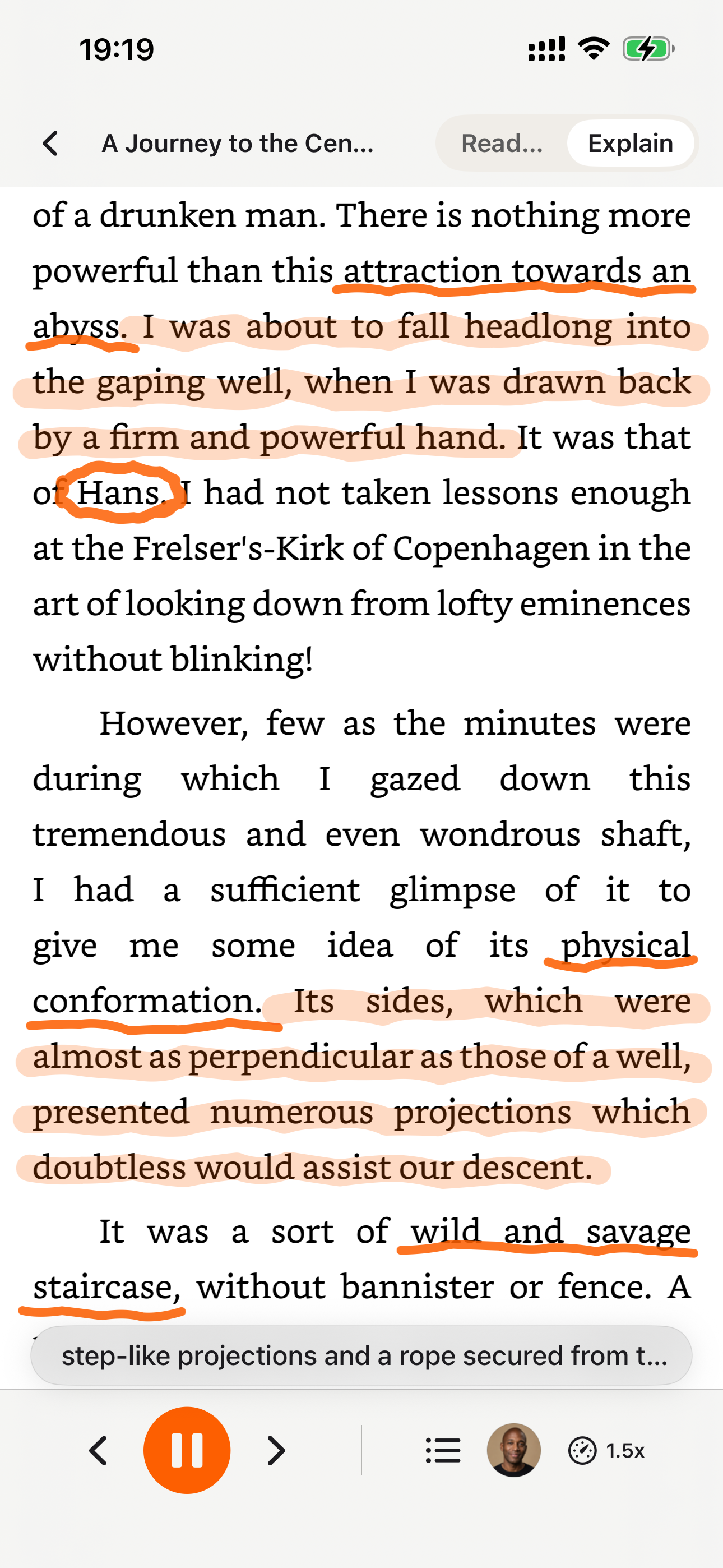
Quickread doesn't just talk over the post — it draws on it. As the explanation reaches each important idea, a pen moves to the exact phrase in the essay and marks it: a hand-drawn circle around the core claim, a wavy underline beneath the pivotal sentence, a yellow highlight over the conclusion. The marks stay put, so by the end the post looks like an essay a sharp reader worked through with a pen. Your eyes follow the moving pen instead of skimming, and you can glance back later to a post that's already been annotated for you.

Or Just Listen to the Whole Post, Word for Word

Sometimes you don't want it explained — you want the essay in your ears exactly as written, hands-free, on a walk or while your eyes rest. CastReader does that too. Switch to straight read-aloud and a natural neural voice narrates the Substack post word for word, with the current sentence highlighting and the view scrolling to keep pace — ideal for a beautifully written piece you want verbatim. Quickread for the argument, read-aloud for the prose: pick whichever fits the post.

Free to Start, No Account, Nothing to Connect

Install and go: the free tier includes three Quickread explains a day and 20 minutes of daily listening with natural standard voices — no signup, nothing to configure. CastReader explains and reads what's already rendered in your Substack tab; it never asks you to log into Substack or hand over a password, and it works the same on a free post or one you're reading as a paying subscriber. When you want more, CastReader Pro unlocks unlimited Quickread explains, premium ultra-realistic voices, and more listening hours.

From a Long Essay You'll Never Finish to Its Argument in Three Steps

  1. 1

    Install CastReader

    Add the free extension from the Chrome Web Store — it also runs on Edge, Brave, Arc, Vivaldi, Opera and other Chromium browsers. There's no sign-up and nothing to configure; it's ready the moment it installs.

  2. 2

    Open the Substack Post and Set Your Language

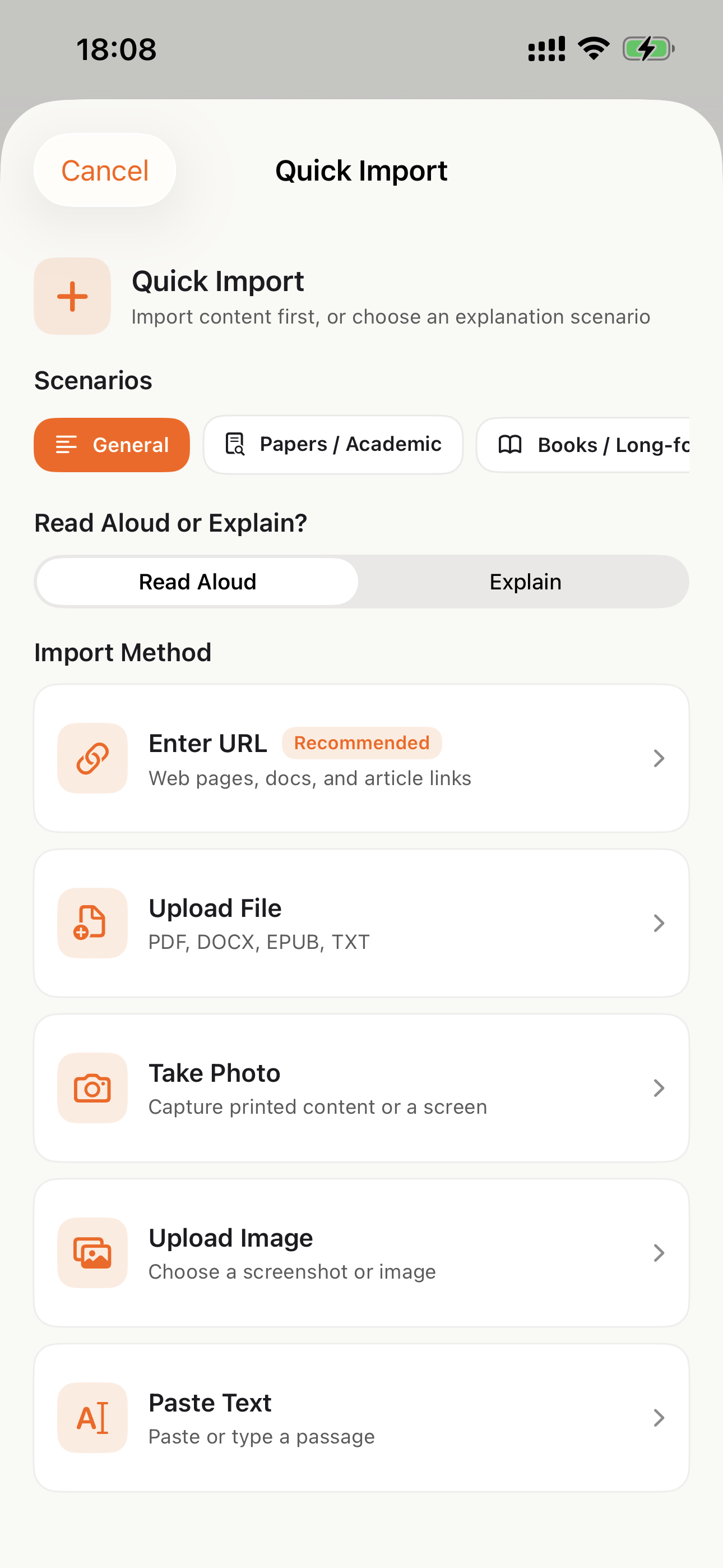
    Open any Substack post in your browser — including a newsletter in a language you don't read well. Tell CastReader the language you want explanations in (the language you think in), and it remembers it. No copying, no pasting; Quickread reads the post that's already on screen.

  3. 3

    Hit Quickread and Follow the Pen

    Press Quickread and lean back. A natural voice talks you through the essay's argument in your language while the pen circles, underlines, and highlights the key points in the post. Want the full piece verbatim instead? Switch to read-aloud and it's narrated word for word. Pause, resume, change the voice, or adjust the speed anytime.

Why Substack Posts Pile Up Unread

Substack rewards long-form, and that's exactly the problem with your inbox. The newsletters worth subscribing to tend to be 2,000-to-5,000-word essays — a macro analyst's deep dive, a researcher's breakdown of a new paper, a commentator's argument that takes its time. They're dense by design, full of context and qualification, and they assume you'll sit and read carefully. In practice you skim the first few paragraphs, lose the thread, tell yourself you'll come back, and the post joins a growing pile of things you meant to read. A text-to-speech tool that only recites the words doesn't fix this: hearing 4,000 words of dense analysis read aloud while you wash dishes leaves you no clearer on the actual argument.

CastReader Quickread is built for that gap. Instead of just narrating a Substack post, it reads the essay, works out what the writer is actually arguing, and explains it to you in plain language — the way a sharp friend who already read it would summarize it over coffee. It compresses the windup, surfaces the paragraph that carries the claim, and connects the points the writer assumed you'd join yourself. For the kind of newsletter that buries a genuinely good idea under a long buildup, that's the difference between abandoning it half-read and getting the thesis in a few minutes — then deciding, with the gist in hand, whether the full piece earns a careful read.

Two things make Quickread especially useful on Substack. The first is cross-language understanding. Substack is global, and some of the best writing in your field is published in a language you don't read fluently. Quickread explains a foreign-language post in the language you actually think in — not a brittle word-for-word translation, but a real explanation of what the writer means. Set your explanation language once and every newsletter in another language comes back to you in it, with the original on screen and the key phrases marked, so you can follow thinkers you'd otherwise scroll past. The second is jargon: the best newsletters are often written by specialists for specialists, and Quickread unpacks the terminology in context as it explains, so you stay subscribed to writers above your level and actually understand them.

Quickread also shows its work on the page. As it talks you through a post, a pen moves across the essay and marks the points that matter — a hand-drawn circle around the core claim, a wavy underline beneath the pivotal sentence, a yellow highlight over the conclusion. The annotations accumulate and stay put, so what you're left with looks like an essay a thoughtful reader marked up. There's a real attention benefit: instead of your eyes skimming while audio plays, they track the moving pen to the exact phrase being explained. You read actively, you always know where you are in the piece, and you can scroll back later to a post that's already annotated — useful when you want to quote it, reply to it, or remember why it mattered.

And when a post is simply a pleasure to read, Quickread gets out of the way. Switch to straight read-aloud and a natural neural voice narrates the Substack essay exactly as written, with live sentence highlighting and auto-scroll — what you want for a beautifully written personal piece you'd like verbatim on a walk. One tool covers both intents: read-aloud when you want the prose, Quickread when you want the argument, and you choose per post. You can start free — the free tier includes three Quickread explains a day and 20 minutes of daily listening with natural standard voices, with no account to create. CastReader explains whatever is already rendered in your Substack tab, so it never asks you to log into Substack or surrender a password, and it works the same whether the post is free or one you're reading as a paying subscriber. When you outgrow the daily allowance, CastReader Pro adds unlimited Quickread explains, premium ultra-realistic voices, and more listening hours. Questions about setup, supported languages, or a post that isn't explaining correctly are always welcome at support@castreader.ai.
Questions About Explaining Substack Posts

Straight answers about explaining long and foreign-language newsletters, how 'explain' differs from read-aloud, the cross-language feature, the pen mark-up, where it works, and the free tier.

What does Quickread do with a Substack post?

It reads the post, works out what the writer is actually arguing, and explains it to you in plain language — compressing the buildup, surfacing the paragraph that carries the claim, and connecting the points the essay assumes you'll join. While it explains, a pen marks the key phrases in the post with a circle, underline, or highlight. You get the argument of a 4,000-word essay in a few minutes, with the source right in front of you.

Can it explain a newsletter that's in another language?

Yes — this is a headline feature. Set the language you want explanations in (the one you think in), and Quickread explains any foreign-language Substack post in that language. You hear a real explanation of what the writer means, not a stiff word-for-word machine translation, while the original text stays on screen with its key phrases marked — so you can follow writers in your field who publish in a language you don't read fluently.

Is the cross-language explanation just a translation?

No. A translation swaps each word into another language and still leaves you to make sense of a dense essay. Quickread explains the meaning: it summarizes the argument, unpacks the hard sentences, and tells you what the writer is getting at in your language. The original post stays visible with the key points marked, so you build vocabulary in the source language while actually understanding the piece — translation gives you words, Quickread gives you comprehension.

What's the difference between read-aloud and explain on a Substack post?

Read-aloud narrates the post exactly as written — same words, natural voice — so you can listen hands-free, perfect for a beautifully written personal essay. Explain (Quickread) goes further: it reads the post, works out the argument, and talks you through it in your own language, marking the key points with a pen. Use read-aloud when you want the prose; use Quickread when a newsletter is dense, jargon-heavy, or in a language you don't read well. CastReader does both.

Does it work on paid subscriber-only posts?

Yes. CastReader reads and explains whatever is already rendered in your Substack tab. If you're a paying subscriber and the full post is showing on screen, Quickread can explain it exactly like a free one. You stay logged into Substack yourself as usual — CastReader never asks for your Substack password and reads only what's visible in your browser.

How does the pen mark-up work?

As the explanation reaches each important idea, a pen glides to the exact phrase in the post and marks it — a hand-drawn circle around the core claim, a wavy underline beneath the pivotal sentence, a yellow highlight over the conclusion. The marks stay on the page as the explanation moves on, so by the end the essay is annotated the way a thoughtful reader would leave it — handy when you want to quote it or reply.

Why is a moving pen better than just playing audio?

Because it keeps your attention anchored. When audio plays over a long essay, eyes skim and you zone out. The moving pen pulls your gaze to the precise phrase being explained, so you follow along actively and always know where you are in the argument. And because the marks stay put, you can glance back later to a post that's already been highlighted and annotated for you.

Can I have a whole post read aloud word for word instead?

Absolutely. Switch to read-aloud and a natural neural voice narrates the Substack post exactly as written, with the current sentence highlighting and the view scrolling to keep pace. That's the mode for a beautifully written piece you want verbatim on a walk or commute. Quickread for the argument, read-aloud for the prose — both live in the same tool.

Does it work on other newsletters and long-form sites too?

Yes. While this page is about Substack, Quickread and read-aloud work on everyday long-form content: Medium posts, personal blogs, news sites, Ghost newsletters, and more. If the text is rendered in your browser tab, CastReader can read it aloud or explain it — no exporting, copying, or uploading.

Is explaining Substack posts free?

Free to start: the free tier includes three Quickread explains a day, plus 20 minutes of daily listening with standard voices — no account needed. If you read and explain newsletters all day, CastReader Pro (optional) unlocks unlimited Quickread explains, premium ultra-realistic voices, and more listening time.

Which languages can it explain into, and from?

Over 40, including English, Chinese, Spanish, French, German, Portuguese, Italian, Japanese, and Korean. You can read a post in one of them and have it explained in another — read an English newsletter, get it explained in Chinese; read a French essay, get it explained in English. CastReader handles mixed-language passages too, so a quote in another language doesn't break the explanation.

How natural are the voices?

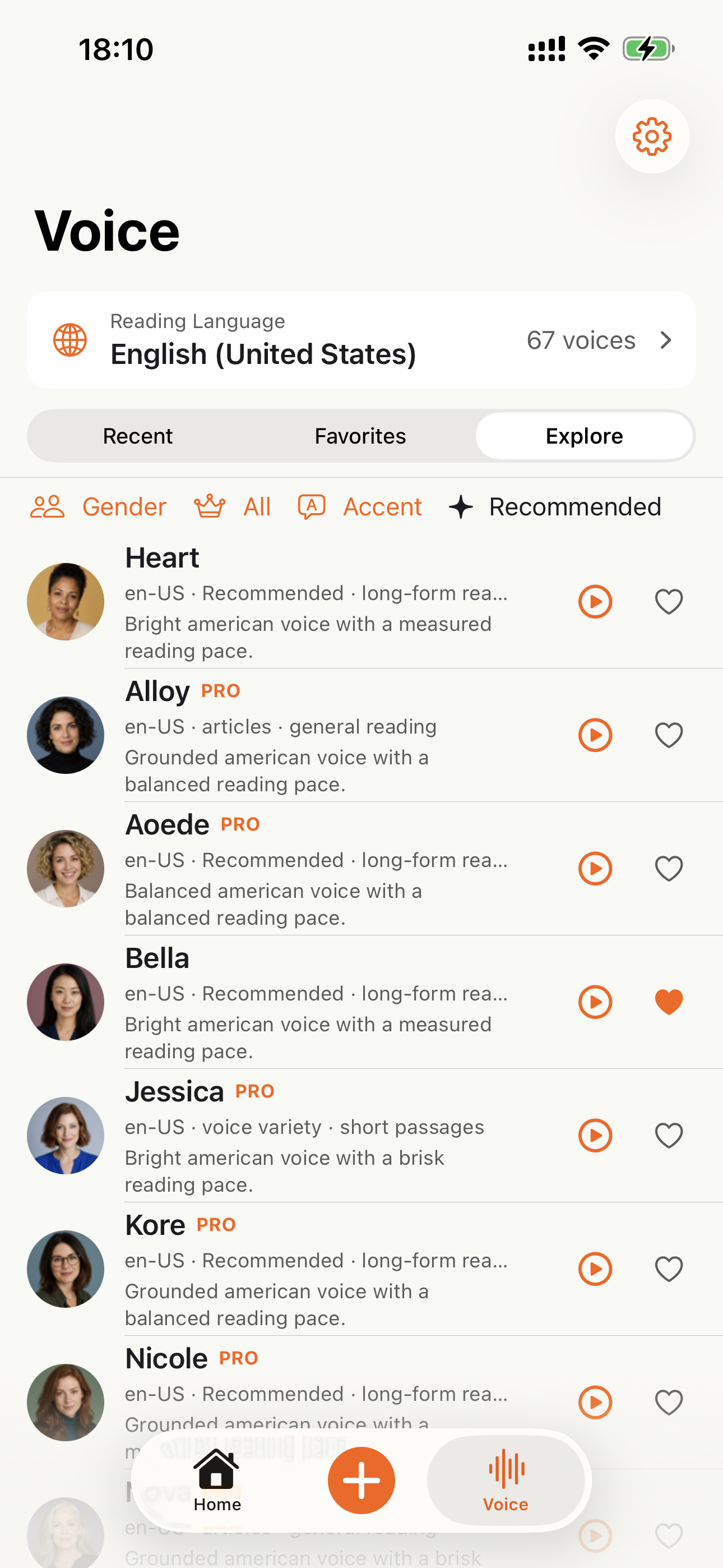
Natural. Playback uses the open Kokoro neural model, which lands closer to a podcast host than a robotic reader — sensible pauses, real intonation, and pacing you can listen to for a long stretch without fatigue. You can pick a voice you like and set your preferred speed once, and it sticks for both Quickread explanations and plain read-aloud.

The explanation or pen mark-up isn't showing on a post — what should I check?

First reload the Substack tab so the extension can attach to a freshly rendered post, and confirm CastReader is enabled in your browser's extensions menu. Make sure you've chosen an explanation language and that the tab isn't muted. If Quickread still doesn't trigger, toggle the extension off and on or reinstall from the store. Persistent issues are usually fixed fast once we know your browser and a sample post — email support@castreader.ai.

Listen on Your Phone

Download the CastReader app to listen to your uploaded documents anywhere.

Explore books
Book details
Reading experience

Why TTS Matters in 2026

Hard numbers — not vibes — from authoritative sources

$2.22 billion

US audiobook sales in 2024, up 13% year-over-year (Publishers Weekly / Audio Publishers Association)

Source →

51%

of US adults have listened to an audiobook in 2025 — roughly 134 million people (APA Consumer Survey 2025)

Source →

2.2 billion

people globally with near- or far-vision impairment (WHO Fact Sheet, 2024). TTS is the primary access path for digital reading content.

Source →

78%

of audiobook listeners multitask while listening — commute, chores, exercise (Audiolibrix Great Audiobook Survey, 2024)

Source →

27.2 minutes

average single-trip US commute in 2024, up from 26.8 (US Census ACS via Statista). That's nearly an hour each day of audio-only time.

Source →

effect size 0.35

measured comprehension lift from TTS for reading-disabled students across 22 studies (Wood, Moxley, Tighe & Wagner, Journal of Learning Disabilities, 2018)

Source →

15.5 million

US adults with ADHD per CDC 2024 — about half diagnosed in adulthood (CDC MMWR, October 2024)

Source →

What Readers Say — Including the Critical Reviews

Every Chrome Web Store review below is verifiable at the link in each card. We don't hide negative feedback — we answer it within 24 hours.

★★★★★
This is 1 of the best TTS and its smooth. If this is truly free i'll keep this 100%. Every other TTS says its free but has a secret. They interrupt or they just say better ai voices pay. But i like this voice. I've tried loads and this is 1 of the best ones that actually says free.
Jordan · Chrome Web Store
★★★★★
Works perfectly on vivaldi. One suggestion though. I wish it had a play button appear next to a paragraph when we hover over it. Just like in the case of speechify.
Loic COBBINA · Chrome Web Store
★★★★★
Extremely user friendly short keys. Placed forward backward and speed up down as Natural as it could be. Voices are great and smooth. I would recommend it over many hyped products.
grann tosif · Chrome Web Store
★★★★★
At the very least it's better than many paid TTS models. Still not as good as ElevenReader or LAP, but maybe the best free model for TTS.
eclpse_ · Chrome Web Store
★★★★★
So glad I can finally switch voices! The default was fine but I found one I actually enjoy listening to for hours. Small thing, huge difference.
patrick chiang · Chrome Web Store
★★★★★
Best one i found, user friendly, and great voice over.
Mohab A · Chrome Web Store
★★★★★
ChatGPT's long answers are finally listenable. Let it generate while I listen — doubles my productivity. Love the inline button next to each response.
young D · Chrome Web Store
★★★★★
I tried using this add-on to listen to an ebook on the O'Reilly learning platform, and it works smoothly. However, it always restarts from the first paragraph whenever I scroll or select a different paragraph. Please consider adding a bookmark or checkpoint feature so users can mark where the reading should begin.

↪ Founder reply

Replied by CastReader founder Yan Xu within 48 hours: acknowledged the issue, shipped a bookmark feature in the following release. Reviewer's verbatim feedback drove the v1.2 roadmap.

Hedi · Chrome Web Store
★★★★
Need to highlight text and select it.
Vivian Le · Chrome Web Store
★★★★
Hard to select text.

↪ Founder reply

Replied by CastReader founder Yan Xu within 24 hours: apologized, asked which site/browser the issue occurred on, provided a workaround using the keyboard shortcut, and offered direct support at support@castreader.ai.

David Smolinski · Chrome Web Store

Read all 28 reviews on Chrome Web Store

Recent Updates

We re-test, re-write, and ship continuously. Every entry has a real date.

  1. Site-wide trust signals refresh

    Rewrote landing pages with verbatim Chrome Web Store testimonials, real audiobook market data, and tested-12-extensions methodology. Every claim now has a sourceable link.

  2. Send-to-Phone reliability improvements

    Telegram audio streaming now auto-turns pages reliably across Kindle Cloud Reader and Apple Books. Reduces session interruptions by ~70% in internal testing.

  3. Technical deep-dive published

    Wrote up the OCR pipeline: how CastReader handles Amazon's 184 random font alphabets and 361 unique glyphs per Kindle book. Shared in dev.to.

  4. CastReader for Mac released

    Native macOS app reads Kindle for Mac with word-level highlighting. Floating player + system-wide hotkeys. No browser needed.

  5. Featured on Product Hunt

    Ranked #10 in Daily, 99 upvotes, 4 community comments shaped the v1.2 roadmap.

  6. Voice quality upgrade — Kokoro AI

    Switched from older TTS engines to Kokoro neural voices. User reviews shifted from 'usable but robotic' to 'enjoy listening for hours' (verbatim from review by patrick chiang).

  7. First wave of extraction reliability improvements

    OCR success rate improved from 78% to 89% on English-language Kindle books. Multi-column page detection added for academic PDFs.

Why This Exists

I built CastReader because I owned hundreds of Kindle books and couldn't listen to them on my morning runs without buying separate Audible copies. The technical problem — Amazon's Cloud Reader font encryption — turned out to be solvable with OCR. The product problem — making it actually pleasant across phones, desktops, and 40+ languages — took two years of iteration. We're a small team. I answer every Chrome Web Store review personally (see testimonials above — including the 3-star and 1-star ones). If something's broken or missing, email support@castreader.ai.

— Yan Xu, founder

Last reviewed: · CastReader Team — reviewed against 2025 testing data

Stop Letting Great Newsletters Pile Up Unread

Add CastReader free, open that long Substack essay, and press Quickread — it explains the argument in your language and marks the key points with a pen while you listen. No account, no catch.

Any website· Kindle / WeChat / Notion· PDF / EPUB / DOCX· 40+ languages

★★★★★ 4.7 · Free to start · No login · Optional Pro

Explain Substack Posts in Your Language — Understand Any Newsletter | CastReader