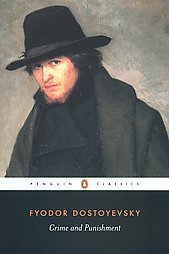
Download the complete English Crime and Punishment EPUB from Project Gutenberg. It is free, requires no account, and uses Constance Garnett’s translation. A second free option is Standard Ebooks’ compatible EPUB, also translated by Garnett. For an immediate start, open Part I, Chapter I as a webpage.
Finding a file is the easy part. The more useful preparation is knowing what kind of attention this novel asks for. You spend long stretches close to Raskolnikov’s changing explanations of himself. Keeping track of what he does, what he says, and what he privately claims can matter more than racing to the next event.
Choose the translation deliberately
Gutenberg ebook 2554 identifies Garnett as translator. Standard Ebooks identifies its text as her 1914 translation, with separate ebook formatting. Choosing between these two files is therefore mainly an edition and presentation choice, not a comparison of two translators.
Both sources identify their texts as public domain in the United States. Check local copyright rules if you are elsewhere. A newer English translation, a modern introduction or a set of annotations can have different rights from this particular text. A search result saying “free Dostoevsky” does not establish that every translation is freely downloadable.
We downloaded both linked EPUBs and checked the English metadata, unencrypted file structure, opening, six parts and final epilogue. These are complete novels, not previews or ACSM authorization files. That check does not amount to a full-book import or playback test. Standard Ebooks may show a download-start page before delivering the actual .epub; keep the file rather than saving the landing page.
If you are reading for a class or alongside a print copy, match the translator first. Paragraph wording and page numbers will differ between translations. Even with the same translation, use part and chapter to locate a passage in a reflowing EPUB. The chapter numbering starts over in each part: “Chapter II” alone is an ambiguous bookmark.
The Gutenberg file includes a translator’s preface before the novel. Readers avoiding plot information can begin at Part I, Chapter I and return to the preface later. The story opens with a young man leaving his garret on a hot July evening. That is a useful starting-position check when a reader app initially opens the cover or front matter.
Four name connections that prevent unnecessary backtracking
Russian given names, patronymics, surnames and familiar forms can make one person seem like several. Keep a small list as people enter the story; you do not need a spoiler-filled complete character guide.
| Names you may encounter | Connection to remember |
|---|---|
| Rodion Romanovitch Raskolnikov; Rodya | The central former student. Raskolnikov is the surname. |
| Avdotya Romanovna; Dounia | Raskolnikov’s sister. Other translations may spell the familiar name Dunya. |
| Sofya Semyonovna; Sonia | Marmeladov’s daughter. Sonya is another common English spelling. |
| Razumihin / Razumikhin | Raskolnikov’s friend; do not merge him with Raskolnikov because the names begin similarly. |
These forms are a reading aid for the Garnett text, not a pronunciation standard for every English edition. Add a role beside a name when you first meet it. That is usually more helpful than repeatedly searching the whole cast, where a short biography can reveal a character’s later fate.
If you listen, keep this list visible during early conversations. A synthetic voice may pronounce a name inconsistently or make two similar names sound closer than they look. Check the spelling before deciding that the speaker has changed.
Follow a justification, not only the investigation
The novel’s early premise involves a planned murder; its sustained interest includes the mind trying to justify it. A useful three-line note after a chapter is:
- Action: what actually happened in this scene?
- Explanation: what reason does Raskolnikov give, publicly or privately?
- Friction: what detail does that explanation fail to account for?
For the opening chapter, you can already distinguish his material circumstances from the way he talks to himself about acting. The cramped room, debt and avoidance of the landlady are observable conditions. His private argument about courage and action is an interpretation. The novel gives you both; you do not have to adopt the interpretation merely because you are close to his thoughts.
This approach also leaves room for the people around him. When another character speaks, ask what they need from the exchange rather than treating everyone as an accessory to his theory. Poverty, family obligations and unequal power continue to matter while the psychological drama unfolds.
Reader reactions make the pacing tradeoff clear. In the Goodreads reviews checked on November 3, longtime favorable responses emphasize immersion in guilt and conscience, while critical responses find the repeated inner argument exhausting. Recent reader Ethan liked the first half more than the second; Olive Darling found the novel riveting. These are individual experiences, not evidence that one reaction is correct.
Try one chapter per sitting at first. Stop at a chapter boundary rather than halfway through an argument, and record its part number. If the reading feels repetitive, notice whether the speaker is genuinely revising a view or rehearsing it to make it bearable. You can find that pattern meaningful without enjoying every minute of being inside it.
The novel includes murder, suicide, exploitation and severe distress. Choose a time when you want an intense psychological book rather than treating its classic status as a promise of comfortable listening.
For a shorter comparison, The Tell-Tale Heart’s free-text guide separates a speaker’s claims from the evidence offered for them. Poe’s first-person address is different from Dostoevsky’s narration; comparing that distance is more interesting than treating the two works as the same account of guilt.
Listen with the part and chapter in view
Save one of the checked EPUBs, open CastReader’s EPUB workspace, and select the file. Choose Part I → Chapter I, then confirm the opening about the hot July evening before continuing. Neither file needs DRM removal. We have checked their contents and structure, but have not tested uninterrupted whole-book playback.
An available device voice provides free web reading without signing in. The file is parsed locally in your browser. Optional AI voices require sign-in and follow plan limits; cloud voices send reading text for speech generation. Local file parsing does not make an optional cloud voice local.
If you prefer HTML, get CastReader, open the direct first-chapter link, and check the highlighted paragraph. The anchor scrolls the webpage; it does not guarantee an extension’s starting passage. If reading begins later, pause and select the intended passage, or use the EPUB contents for a clearer chapter route. The Gutenberg setup guide explains the browser workflow.
Start near ordinary speaking speed and slow down for unfamiliar names or a long exchange. TTS can help you follow the rhythm of an argument. It cannot decide which explanation to trust, and a single synthetic voice is not a cast performance.
Edition and download details checked November 3, 2026. Two complete English Garnett EPUBs downloaded and structurally checked; no full-book import or playback tested.