A search for Fahrenheit 451 EPUB can produce the novel, a graphic adaptation, study notes and files whose source is unclear. Before deciding how to listen, make sure you are getting Ray Bradbury's prose novel. Then bring a second question to the text: what makes people stop paying attention even before somebody forbids them to read?
For a complete English EPUB loan, try the New York Public Library's Fahrenheit 451 record. It lists Ray Bradbury, Simon & Schuster, English, and EPUB ebook, ISBN 9781439142677. An eligible NYPL card and an available loan are required. Readers elsewhere should check their own library's edition and formats; the listing is not an account-free download for everyone.
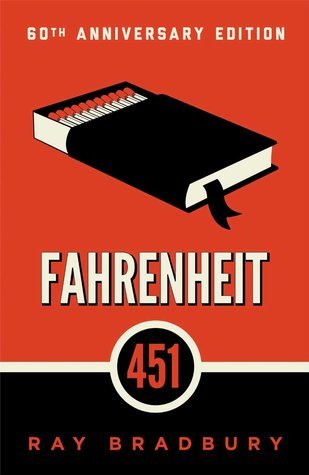
Which download is actually the novel?
The paid option checked for this guide is Kobo's Simon & Schuster English ebook, also ISBN 9781439142677. Its details specify EPUB 3 with Adobe DRM. This is a purchase listing, not a direct download, and it requires an account and regional eligibility. During our check the US page displayed an unavailable-in-Singapore notice, so do not assume a US link guarantees purchase access from your country.
After purchase, Kobo's download instructions explain account export. A protected download may involve ACSM authorization. It is not a plain EPUB you can rename or import into an unrelated reader. Library loans also have their own access conditions and supported reading systems.
We have not verified an authorized public free complete English EPUB or PDF as of October 29, 2026. An uploaded file appearing in search does not identify who authorized it. Likewise, a search result mentioning Gutenberg is not enough to establish that the novel has a public-domain entry in the main Project Gutenberg catalog. Use the specific library or store record rather than treating a familiar-looking label as a rights statement.
The National Endowment for the Arts reader resource PDF is a useful four-page guide, not the novel. It discusses the plot through the ending. Save it until after a first read if you want to avoid spoilers. A graphic adaptation is also a different work: it can be worthwhile, but it will not supply the prose passages expected in a class using the original novel.
Four people to keep distinct at the beginning
The NEA's introduction places the original novel in 1953. Some catalogs display the release date of a later edition, including the 2011 ebook above; that is not the date Bradbury first published the novel.
Guy Montag works as a fireman who burns books. Clarisse asks questions that disrupt his ordinary assumptions. Mildred, his wife, is absorbed in screen entertainment. Beatty, his superior, can articulate a defense of the world Montag serves. Remembering those roles is enough to begin; you do not need an ending summary or a complete cast list.
As you meet each person, ask what counts as a satisfying answer to them. Does a question invite thought, shut down a conversation, or protect somebody from discomfort? That gives you a way to examine the society through conversations rather than reducing every scene to a slogan about censorship.
Read in three passes of attention, not one race to the ending
The novel has three main parts. You can use their boundaries as checkpoints without dividing your time into equal page counts, which vary by edition.
At the end of the first part, identify an ordinary habit that now seems strange. Describe what the habit does for a character before judging it. If it supplies comfort, speed or belonging, write that down alongside its cost. This helps explain the appeal of the society rather than assuming everyone in it is simply foolish.
In the middle part, separate possessing information from understanding it. Mark a passage you can repeat but cannot yet explain. Return to it after the scene. Does hearing it in another voice make its logic clearer, or does it only make it sound more authoritative? Either result can be useful to notice.
After the final part, revisit one image from your earlier notes. Fire is an obvious choice, but sound, silence or a screen can also work. Ask whether its meaning has stayed fixed. Use a specific passage to support your answer before moving to a present-day comparison.
For a discussion group, try one question before “Did Bradbury predict our world?”: What does this scene show a person doing, and what explanation are we adding ourselves? That keeps a current analogy from replacing the novel. Readers can disagree about the warning while still noticing how the language delivers it.
Admiring the warning does not mean enjoying every sentence
The Goodreads responses we read differ on both style and argument. Justin's review values Bradbury's poetic writing. Emily May's older review, with a visible 2026 note, disputes the technological argument and pacing; it is not a new 2026 rereading. In a recent October 29 response, Bianca finds the book powerful but its sometimes frantic narration difficult to follow. These are individual reading experiences, not a consensus.
If the figurative prose slows you down, try paraphrasing a paragraph's literal action before interpreting its images. If you enjoy the language but disagree with a character's claim, mark that disagreement instead of treating it as a reading failure. The novel gives a group something to argue about; agreement is not the only sign of attention.
Can TTS help with a book about distracted listening?
It can, if you use it as a way to examine the words. Start with a short passage, keep the text visible, and pause when an image seems to change the scene's mood. After listening, describe the passage in your own words. If you cannot, replay less text or read it silently before continuing. Speed is a setting to adjust, not the goal of the session.
The protected Kobo edition and library loan above should stay in their authorized reading systems. CastReader's EPUB workspace accepts compatible DRM-free EPUB files; this guide has not verified that the linked editions can supply one. We did not buy, borrow, download the complete novel or test a full-book import.
For a low-friction start, put your own notes about attention and imagery into CastReader's free TTS tool. With Kindle reading access you already hold, use the separate Kindle reading-page guide and download CastReader. That route does not grant a book purchase or establish EPUB-export rights. An available device voice is free without an account. AI voices require sign-in and follow plan limits; cloud voices send reading text for speech generation. TTS is synthesized reading, not the performance of a licensed audiobook narrator.
To compare how another dystopia controls language and evidence, continue with 1984 and its Newspeak appendix. For a different side of Bradbury's imagery, Something Wicked This Way Comes puts age and desire into a carnival story.
The useful outcome is not merely reaching the last page. It is being able to return to a passage, notice what it asks you to accept, and decide what you think about it.