There's a tidy story everyone tells about text-to-speech: it's a productivity tool. You're busy, you have an inbox full of long articles, so you have them read aloud while you do something else. Skim more, in less time.
We build a read-aloud extension, so we have a front-row seat to how people actually use one — and the tidy story turns out to be mostly wrong. We looked at 41,396 anonymous listening sessions from 3,075 devices over about ten weeks (April 8 – June 22, 2026). The clearest pattern in the data isn't productivity at all. It's fiction.
Finding 1: The #1 use of read-aloud is novels, not news
When we rank the platforms people listen on, the top of the list is dominated by one thing: places you read stories. WeRead, Kindle, Royal Road, FreeWebNovel, NovelBin, Archive of Our Own, translated-web-novel sites — fiction and books, all the way down. News sites and productivity apps are there too, but they're the long tail, not the headline.
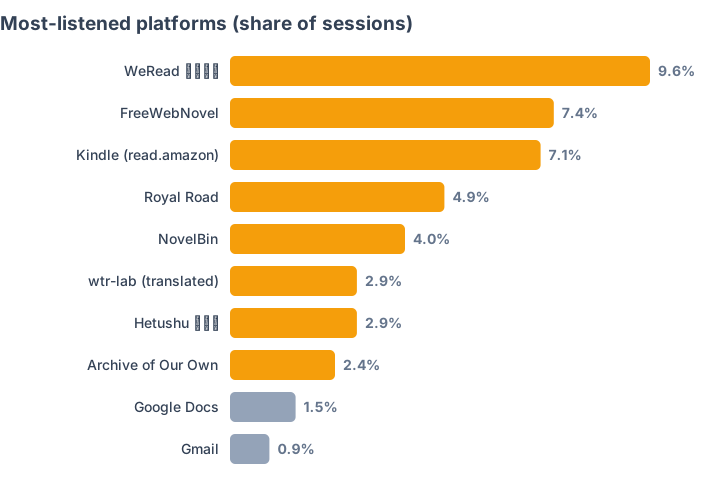
Add it up and roughly half of all identifiable listening is fiction or books. The most-listened single platform wasn't a newspaper or a docs app — it was WeRead, a serialized-reading platform, followed closely by a free web-novel site and Kindle.
This makes sense once you stop picturing the "busy professional clearing an inbox" and start picturing the person three chapters into a 200-chapter web serial that will never become an audiobook. Audible covers bestsellers with professional narration. Read-aloud quietly covers everything else — the enormous long tail of web novels, fanfiction and personal ebooks — on demand, for free.
Finding 2: People listen to the end
If this were skim-listening, sessions would be short and abandoned. They aren't. The average session was heard 71.7% of the way through, and nearly 60% of sessions ran to 90–100% completion.
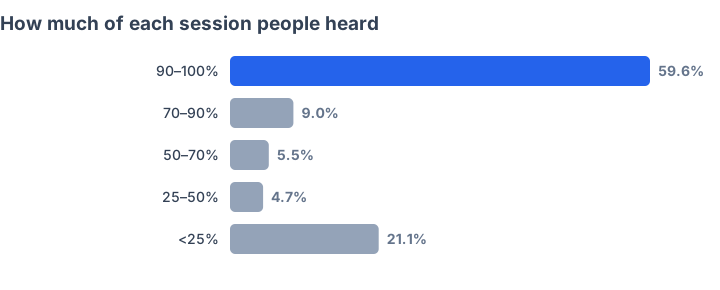
The average session played about 59 paragraphs. That's not sampling a page — that's settling in. Listening, it turns out, sustains attention through long content in a way skim-reading doesn't.
Finding 3: Books get finished most
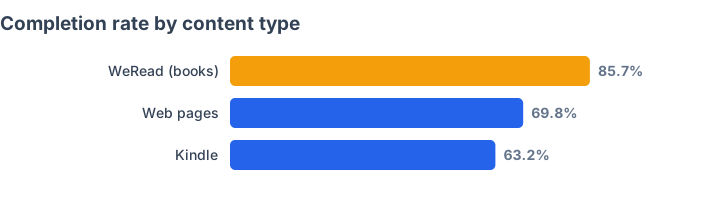
Break completion down by what people are listening to, and books pull ahead. WeRead sessions finished at 85.7% — markedly higher than general web pages or Kindle. When someone presses play on a book chapter, they tend to see it through to the end.
Finding 4: English and Chinese — with a multilingual tail
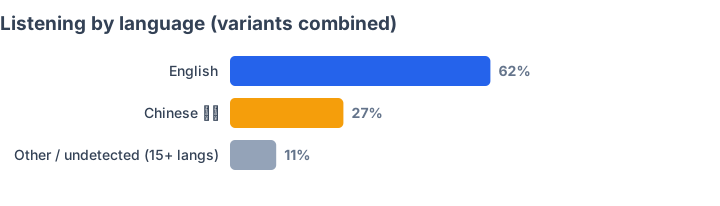
Listening was about 62% English and 27% Chinese, with a long tail of Japanese, Spanish, Portuguese, French, Russian and more.
There's a quieter signal buried in the platform list, too: several of the top fiction sites are machine-translation novel platforms. People are listening to translated foreign-language fiction — reading, by ear, what was never written in their language. It's the same instinct behind our cross-language Read & Explain feature: the thing you want to read isn't always in a language you read comfortably.
What it means
- Read-aloud has become a way to read books — especially serial fiction. It's a parallel audiobook habit built on the long tail, not the bestseller list.
- Engagement is high. ~60% near-complete sessions is a retention number most video would envy. Audio holds you through length.
- Cross-language listening is real and growing — and largely unserved by mainstream tools.
A few honest caveats: this is how CastReader users listen, a group that self-selects toward long-form and fiction readers, measured over ten weeks. It's a genuine behavioral sample, not a census of all readers. All figures are anonymous aggregates — content type, platform, language and completion only, never personal data or page content.
A few quick questions
Where does this data come from? Anonymous, aggregated session metadata from the CastReader browser extension — no identities, no page content, no browsing history.
Is "completion" really finishing a book? It's how much of a given listening session played. People read books across many sessions, so chapter-level completion is the honest read here.
Can I cite these numbers? Yes. Please credit CastReader (castreader.com) and link back. For raw breakdowns, email support@castreader.ai.
CastReader is a free-to-start browser read-aloud extension with cross-language Read & Explain — it reads any page, PDF, Kindle book or AI chat aloud, and can explain a foreign page in your own language. Try it free.