The words you remember from Meditations may not be the words in the first free EPUB you find. Marcus Aurelius wrote in Greek; English downloads can use different translations, and a modern quotation is not a dependable way to identify an older edition.
For a complete free English file, begin with Standard Ebooks’ George Long translation. For a second historical rendering, Project Gutenberg ebook 2680 contains Meric Casaubon’s translation, identified in the edition’s notes. Both files include all twelve books. Neither is Gregory Hays’s modern translation.
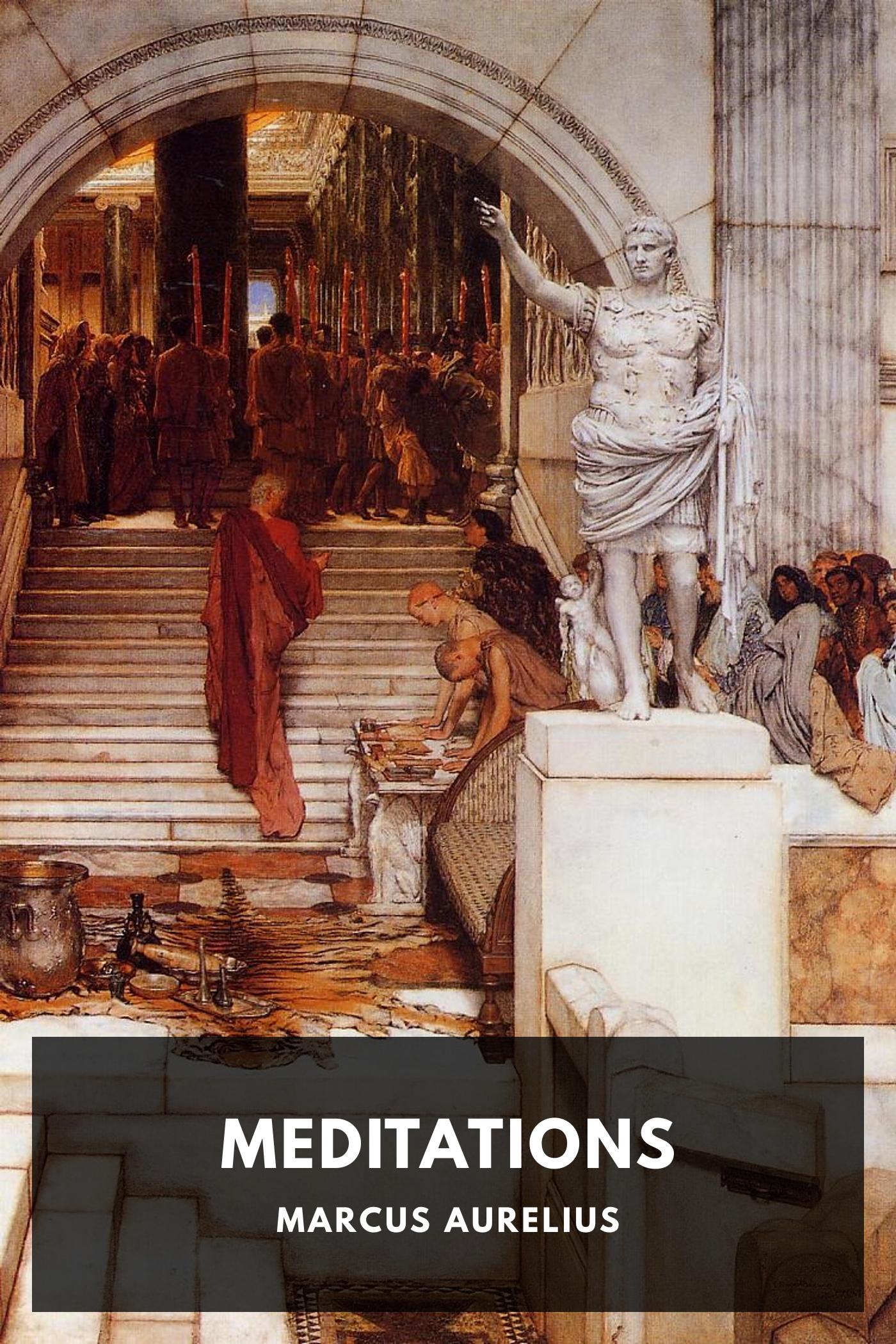
Choose the file by translator
| Edition | Exact access route | What you are choosing |
|---|---|---|
| George Long, Standard Ebooks | Download the ordinary EPUB, or use the book page’s Compatible epub option | Free complete English text, twelve books plus endnotes; approximately 733 KB in our check. No account or payment required. |
| Meric Casaubon, Project Gutenberg #2680 | Download EPUB3 with images, or select that format on the catalog page | Free complete English text with an introduction, appendix, notes and glossary; approximately 455 KB in our check. Its older phrasing differs from Long’s. |
| Gregory Hays, Modern Library | Publisher’s specific ebook record, ISBN 9781588361738 | A separate paid English EPUB edition, with a publisher excerpt. The excerpt is not the whole book. The record does not establish DRM-free export; retailer account, territory and protection terms need checking before purchase. |
The free editions are supplied on a United States public-domain basis. Check local rules if you are elsewhere; a public-domain ancient work does not make every modern translation, foreword or annotation free to redistribute.
We downloaded both free EPUBs and checked their English text, twelve-book structure, opening and ending, and absence of EPUB encryption. Gutenberg’s notes explicitly discuss preparing Casaubon’s text from the 1634 and 1635 editions; the catalog’s author line alone does not tell you that. We did not purchase the Hays edition or test full-book import or playback.
Start with two mornings, not a quotation collection
There is no plot to keep up with, but there is an argument to follow. Try two passages in the Long edition: the first entry of Book II and the first entry of Book V. They share a morning setting and deal with different obstacles.
In Book II’s opening, Marcus anticipates disagreeable people. Stop before turning it into a slogan about ignoring everybody. The passage moves from an expectation of difficult behavior to a claim about human kinship and cooperation. Identify that movement. Which premise makes the conclusion possible? Do you agree with the premise, or only with part of the practical advice?
Book V opens with reluctance to get out of bed. Its form is closer to a conversation with objections than to a command printed on a poster. Rest and pleasure are raised, answered and compared with action. Read the objections in their own right. If you reduce the entry to “work harder,” you lose the exchange that makes it interesting.
Now open the same book openings in Casaubon. You may need to move past the introduction first. Compare a whole paragraph rather than searching for an exact phrase from Long. Note one difference in sentence shape or emphasis, then return to the edition you find easier to follow. This is a reading comparison, not a claim that either historical translation is universally best.
Keep a note that can disagree with the book
For one entry, write three short lines:
- Situation: what difficulty is the writer addressing?
- Reason: what belief supports the response he recommends?
- My reply: where does that reasoning help, and where would I qualify it?
Book I offers a different starting point: acknowledgments of what Marcus learned from other people. If the later reminders feel severe or isolated, return there and notice how much of his account of character begins in relationships. You need not read all twelve books in a single sitting or extract a new life rule from every paragraph.
Repetition can become a useful prompt to compare contexts. When a thought about mortality or judgment returns, ask what it is doing in that particular entry. If it seems genuinely redundant, mark that too. Treating a famous work seriously includes testing its claims.
Why readers disagree about the repetition
Nika’s Goodreads response appreciates its reflective value. Lisa of Troy’s more critical response finds useful advice but questions the distance between some ideals and the position of an emperor. A November 13, 2026 rereading response from David Calhoun focuses on nature, limited time and the book’s assumptions about an ordered universe.
Those reactions suggest different tasks: reassurance, philosophical scrutiny or historical curiosity. Decide which task you are bringing to today’s entry. Goodreads combines responses to different editions, so these comments do not establish how every reader experiences Long’s translation specifically.
For a contrast in form, The Alchemist reading guide asks how advice works inside a fictional journey. Here the reminders do not arrive as a sequence of adventures. Keeping that distinction in view helps you evaluate the writing on its own terms.
Hear the objection as well as the answer
For a compatible, legally obtained free EPUB above, open the EPUB workspace, select Book II or V, and listen with the words visible. Pause after an objection. Restate it before continuing to the answer. This is a more precise listening task than letting a dozen short books run together in the background.
Device voices are free without login, with file parsing in the browser. Cloud AI voices require sign-in and send text for synthesis under plan limits. Historical spelling and long sentences can affect pronunciation and phrasing; the text remains your reference. A synthetic reading is not an interpretation by a philosophy lecturer or a professionally narrated audiobook.
Edition and access details checked November 13, 2026. Two complete free English EPUBs downloaded and checked; no commercial purchase or full-book import/playback performed.