“This is 1 of the best TTS and its smooth. If this is truly free i'll keep this 100%. Every other TTS says its free but has a secret. They interrupt or they just say better ai voices pay. But i like this voice. I've tried loads and this is 1 of the best ones that actually says free.”
Kindle Assistive Reader: What It Is and Which Devices Have It
Assistive Reader is Amazon’s own read-aloud feature inside the Kindle app, with real-time highlighting. It exists on more platforms than most people realise — including Mac — and is missing from two places people expect it most.
The short version
Every claim on this page is traceable to Amazon’s own documentation, linked inline.
iPhone, iPad, Android, Mac and Fire tablets
Amazon lists Assistive Reader for the free Kindle app on iPhone, iPad, Android phones and tablets, Mac, and Fire tablets. If you read on any of those, you already have a built-in read-aloud with real-time highlighting — no extra app, no extra purchase.
Windows does not get it
The Kindle app for Windows is not on Amazon’s Assistive Reader list, even though Amazon’s Mac app is. Windows users get screen-reader support instead — Narrator, NVDA 2017.1 or later, and JAWS — which read the interface rather than giving you a comfortable listening experience.
Enhanced Typesetting only
Assistive Reader works only with books that have Enhanced Typesetting enabled. It also uses your device text-to-speech engine, so the book language has to be one your phone or computer already supports. Playback pauses when you open a menu or write a note.
Assistive Reader, explained properly
For years the honest answer to "can the Kindle app read to me?" was "sort of, if you fight with your phone’s accessibility settings." That changed when Amazon shipped Assistive Reader: a real read-aloud control inside the Kindle app, with the text highlighting in sync as it reads. It is not VoiceOver, it is not TalkBack, and it is not a screen reader — it is a player, with play, pause and speed, built for reading a book rather than for navigating an interface.
The most common confusion is about platforms. Searches for "assistive reader kindle mac" are extremely common, and the answer is genuinely good news: Mac is supported. Amazon lists it alongside iPhone, iPad, Android phones and tablets, and Fire tablets. What trips people up is the opposite case — the Kindle app for Windows is not on that list. If you have been hunting through the Windows app’s settings for an Assistive Reader toggle, you can stop; it is not hidden, it is absent. Windows instead relies on screen readers such as Narrator, NVDA and JAWS, which will read a Kindle book to you but will also read everything else on screen.
The second limitation matters more than it sounds: Assistive Reader only works with books that have Enhanced Typesetting enabled. That is a per-title flag on Amazon’s side. Most modern commercial titles have it; older, converted, or heavily formatted books frequently do not. There is no setting you can flip to force it, so if the Assistive Reader option is greyed out for one book but works for another, the book is the reason — not your device.
Language is the third boundary. Assistive Reader hands the actual speech to your device’s text-to-speech engine. That means a book in a language your phone has no TTS voice for will not read, however well the app works otherwise. This is the single most common reason readers outside English-speaking markets conclude that "Kindle read aloud does not work" when the feature is in fact behaving as designed.
And then there is the place Assistive Reader simply does not reach: Kindle Cloud Reader in a browser. Amazon has never shipped text-to-speech on the web, so if you read at read.amazon.com — on a work laptop, a Chromebook, or any machine where you would rather not install the desktop app — there is no built-in option at all. That gap has a specific technical shape, and it is why ordinary browser read-aloud extensions fail there too.
Assistive Reader questions
The things people actually ask, answered from Amazon’s documentation.
Does Kindle for Mac have Assistive Reader?
Yes. Amazon lists its Kindle app for Mac as supporting Assistive Reader, alongside iPhone, iPad, Android phones and tablets, and Fire tablets. Open a book, go to reading settings (Aa), choose More, and turn on Assistive Reader. For the desktop app that is the right tool — nothing else can reach inside a native Mac application. It is a different story if you read Kindle in a browser on your Mac, because Cloud Reader has no read-aloud at all.
I read Kindle on my Mac — what should I use?
It depends which one you mean. In Amazon’s Kindle app for Mac, use Assistive Reader; it is built in and free, and no external tool can read inside a native desktop application. In Kindle Cloud Reader in Chrome or Edge, there is no built-in read-aloud, and ordinary TTS extensions fail because the page uses scrambled font mappings — that browser gap is where a purpose-built extension is needed.
Why is there no Assistive Reader on Kindle for Windows?
Amazon does not list Windows among the supported platforms. It is not a hidden setting. On Windows, Kindle supports screen readers instead — Narrator built into Windows 11, NVDA 2017.1 or later, and JAWS. Those read the interface as well as the book, which is a different experience from a book player.
How do I turn on Assistive Reader?
Open a book in the Kindle app, tap the screen, tap the Aa (reading settings) icon, choose More, then turn on Assistive Reader. Tap the screen again to bring up the player controls and press play.
Why is Assistive Reader greyed out for one of my books?
Assistive Reader only works with books that have Enhanced Typesetting enabled. That is set per title on Amazon’s side, so it can work for one book in your library and not another. There is no way to force it on for a title that lacks it.
Does Assistive Reader work in Kindle Cloud Reader?
No. Amazon has never added text-to-speech to Kindle Cloud Reader in the browser. Reading at read.amazon.com gives you no built-in read-aloud option on any platform.
Keep reading
Kindle Cloud Reader text to speech
Why the web reader has none, and why generic extensions read gibberish
Listen to Kindle books
The full device-by-device picture, including the browser
Which Kindle has text to speech?
Why e-ink Kindles are a different story entirely
Kindle app read aloud on iPhone and Android
Step-by-step for phones and tablets
Listen on Your Phone
Download the CastReader app for DRM-free EPUB import and supported mobile reading workflows.


Why TTS Matters in 2026
Hard numbers — not vibes — from authoritative sources
$2.22 billion
US audiobook sales in 2024, up 13% year-over-year (Publishers Weekly / Audio Publishers Association)
Source →51%
of US adults have listened to an audiobook in 2025 — roughly 134 million people (APA Consumer Survey 2025)
Source →2.2 billion
people globally with near- or far-vision impairment (WHO Fact Sheet, 2024). TTS is the primary access path for digital reading content.
Source →78%
of audiobook listeners multitask while listening — commute, chores, exercise (Audiolibrix Great Audiobook Survey, 2024)
Source →27.2 minutes
average single-trip US commute in 2024, up from 26.8 (US Census ACS via Statista). That's nearly an hour each day of audio-only time.
Source →effect size 0.35
measured comprehension lift from TTS for reading-disabled students across 22 studies (Wood, Moxley, Tighe & Wagner, Journal of Learning Disabilities, 2018)
Source →15.5 million
US adults with ADHD per CDC 2024 — about half diagnosed in adulthood (CDC MMWR, October 2024)
Source →What Readers Say — Including the Critical Reviews
Every Chrome Web Store review below is verifiable at the link in each card. We don't hide negative feedback — we answer it within 24 hours.
“Works perfectly on vivaldi. One suggestion though. I wish it had a play button appear next to a paragraph when we hover over it. Just like in the case of speechify.”
“Extremely user friendly short keys. Placed forward backward and speed up down as Natural as it could be. Voices are great and smooth. I would recommend it over many hyped products.”
“At the very least it's better than many paid TTS models. Still not as good as ElevenReader or LAP, but maybe the best free model for TTS.”
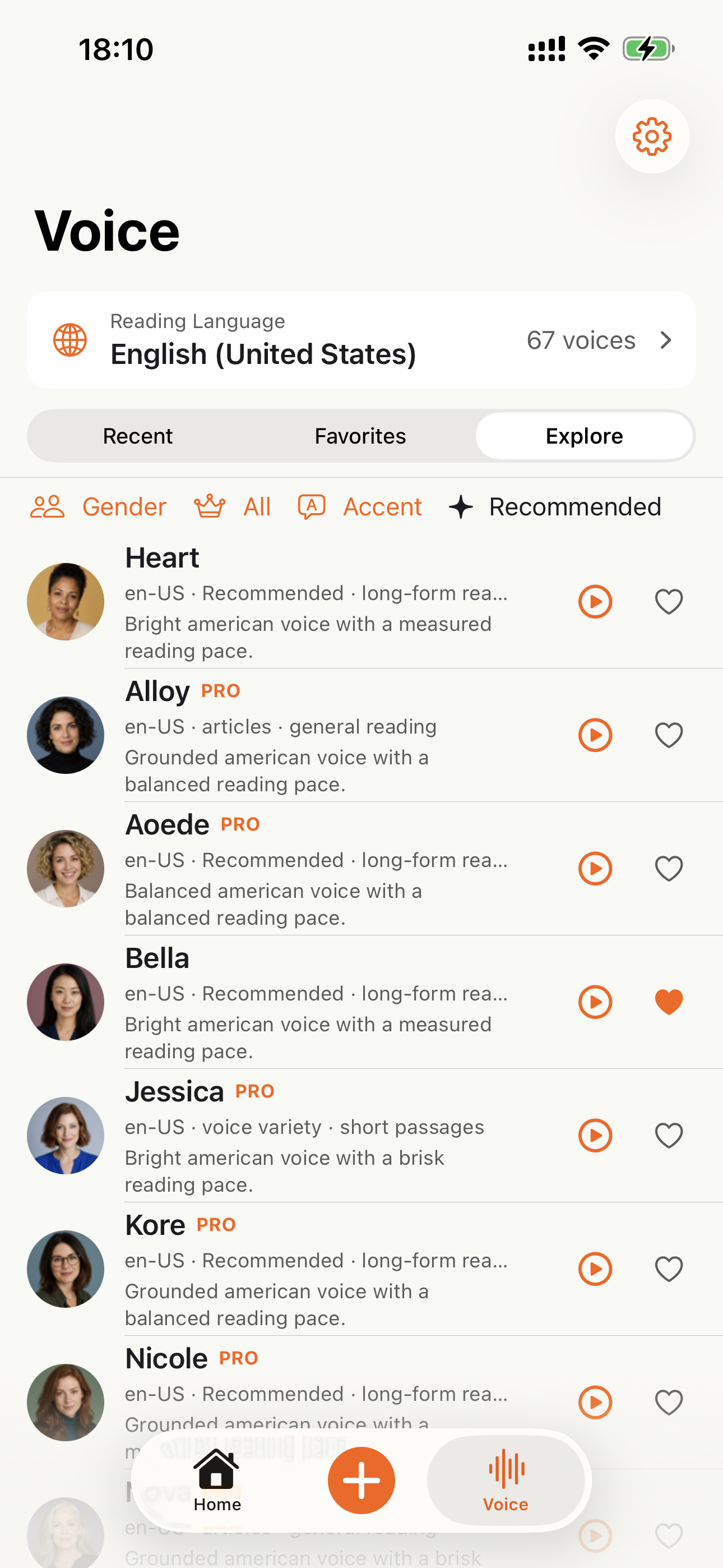
“So glad I can finally switch voices! The default was fine but I found one I actually enjoy listening to for hours. Small thing, huge difference.”
“Best one i found, user friendly, and great voice over.”
“ChatGPT's long answers are finally listenable. Let it generate while I listen — doubles my productivity. Love the inline button next to each response.”
“I tried using this add-on to listen to an ebook on the O'Reilly learning platform, and it works smoothly. However, it always restarts from the first paragraph whenever I scroll or select a different paragraph. Please consider adding a bookmark or checkpoint feature so users can mark where the reading should begin.”
↪ Founder reply
Replied by CastReader founder Yan Xu within 48 hours: acknowledged the issue, shipped a bookmark feature in the following release. Reviewer's verbatim feedback drove the v1.2 roadmap.
“Need to highlight text and select it.”
“Hard to select text.”
↪ Founder reply
Replied by CastReader founder Yan Xu within 24 hours: apologized, asked which site/browser the issue occurred on, provided a workaround using the keyboard shortcut, and offered direct support at support@castreader.com.
Recent Updates
We re-test, re-write, and ship continuously. Every entry has a real date.
Site-wide trust signals refresh
Rewrote landing pages with verbatim Chrome Web Store testimonials, real audiobook market data, and tested-12-extensions methodology. Every claim now has a sourceable link.
Native mobile listening
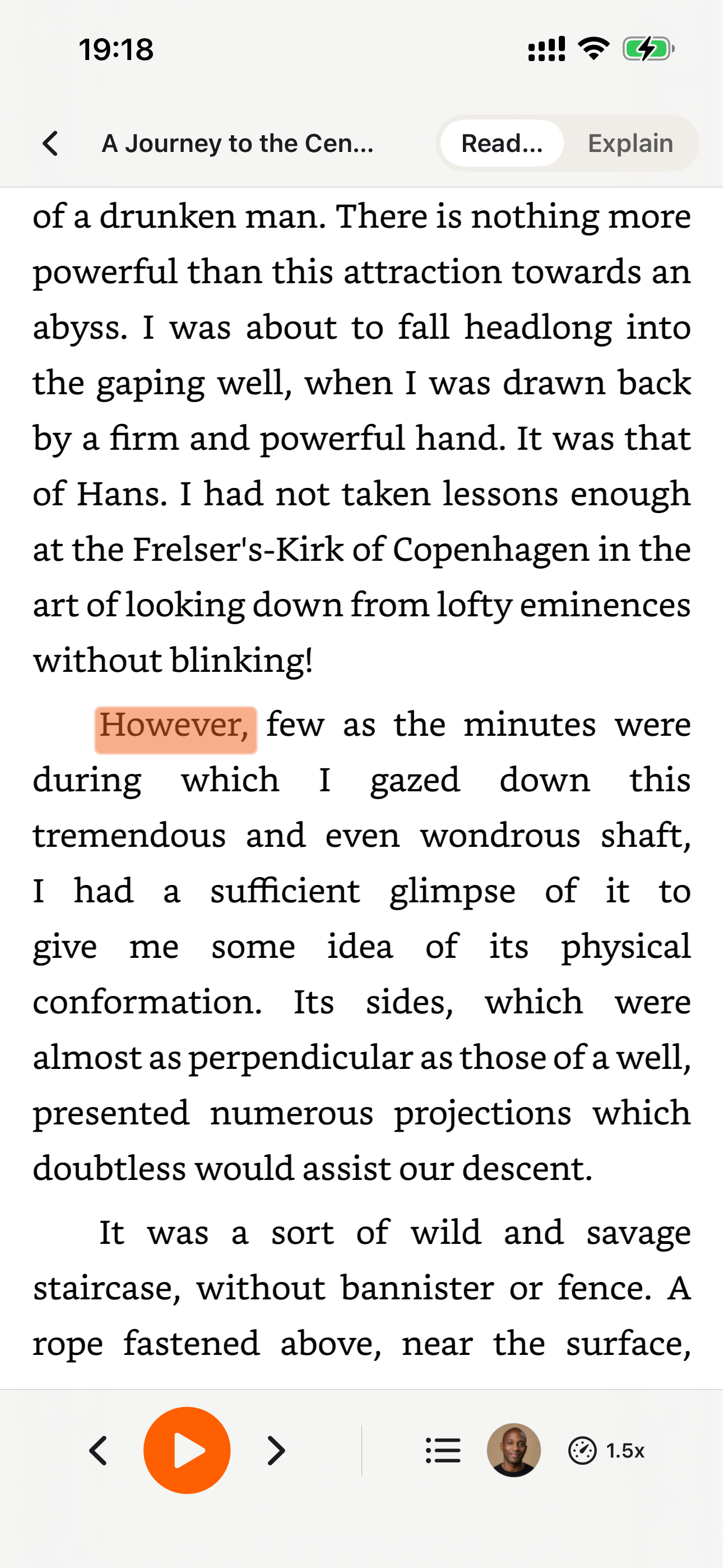
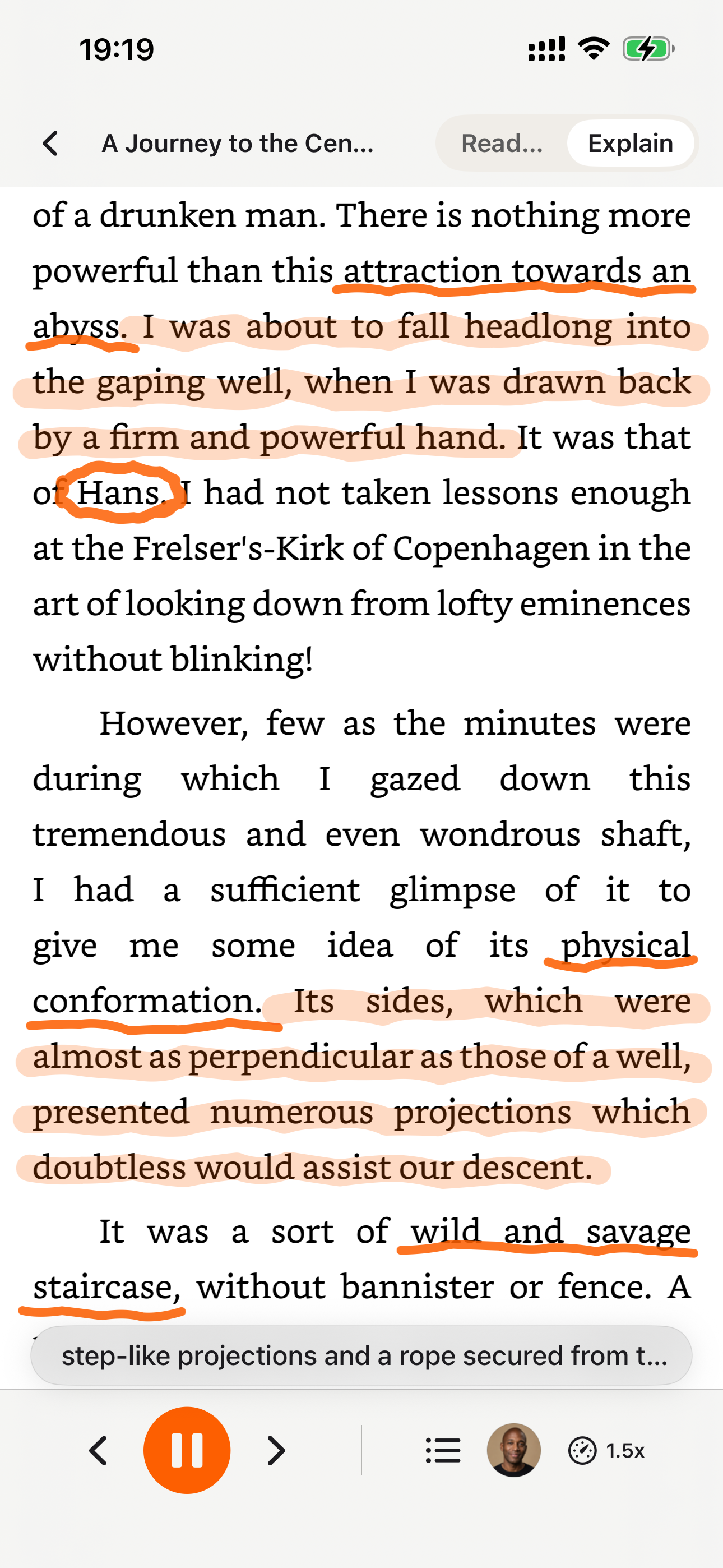
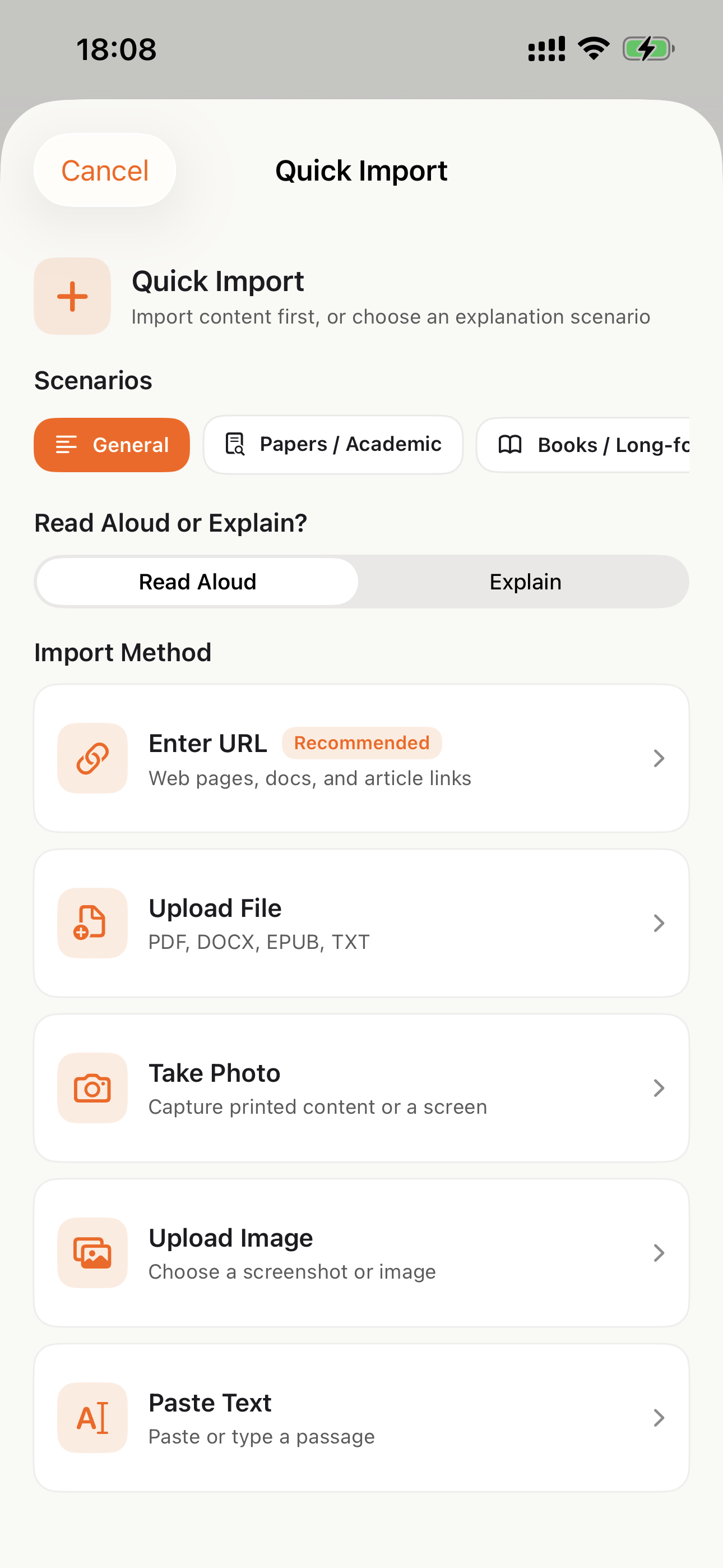
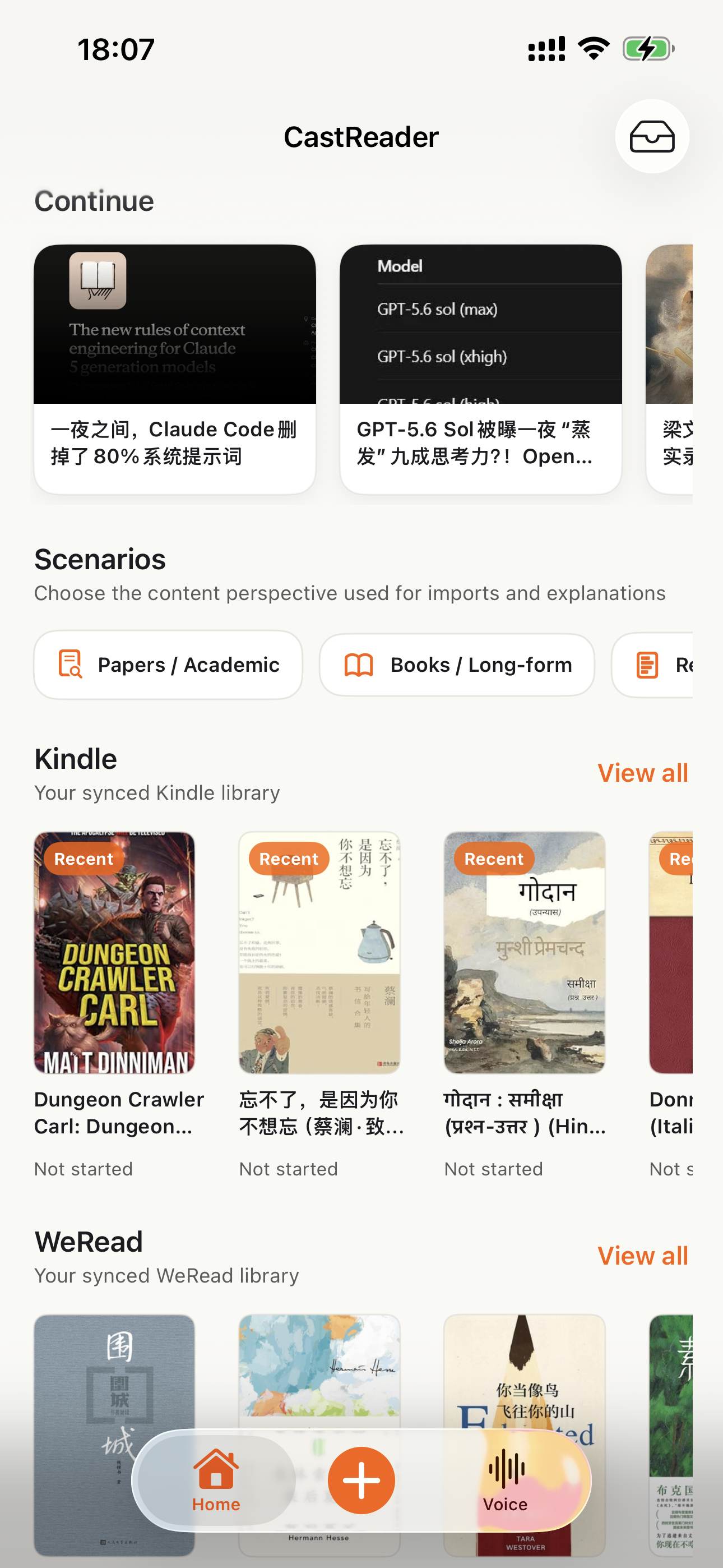
CastReader provides native apps for iPhone and Android; Android downloads are available directly from Google Play.
Technical deep-dive published
Wrote up the OCR pipeline: how CastReader handles Amazon's 184 random font alphabets and 361 unique glyphs per Kindle book. Shared in dev.to.
Mobile Kindle Read Aloud page added
The phone app flow now has its own landing page for bookshelf sync, Read Aloud, synced highlighting, auto-scroll, background playback, and resume progress.
Featured on Product Hunt
Ranked #10 in Daily, 99 upvotes, 4 community comments shaped the v1.2 roadmap.
Voice quality upgrade — Kokoro AI
Switched from older TTS engines to Kokoro neural voices. User reviews shifted from 'usable but robotic' to 'enjoy listening for hours' (verbatim from review by patrick chiang).
First wave of extraction reliability improvements
OCR success rate improved from 78% to 89% on English-language Kindle books. Multi-column page detection added for academic PDFs.
Why This Exists
I built CastReader because I owned hundreds of Kindle books and couldn't listen to them on my morning runs without buying separate Audible copies. The technical problem — Amazon's Cloud Reader font encryption — turned out to be solvable with OCR. The product problem — making it actually pleasant across phones, desktops, and 9 supported languages — took two years of iteration. We're a small team. I answer every Chrome Web Store review personally (see testimonials above — including the 3-star and 1-star ones). If something's broken or missing, email support@castreader.com.
— Yan Xu, founder
Last reviewed: · CastReader Team — reviewed against 2025 testing data
Reading in a browser instead?
Assistive Reader does not reach Kindle Cloud Reader. See what does, and why the browser is a special case.
Browser extensions
For local PDF, DOCX, TXT, Markdown, and images, plus supported webpages and browser-based readers. Local EPUB import is not available.
Mobile apps
For DRM-free EPUBs and mobile reading on iPhone, iPad, and Android.
Official App Store and Google Play downloads · Chrome, Edge, and Firefox extensions