A short chapter can be easy to finish and surprisingly difficult to leave. In All the Light We Cannot See, a section may stop while you still want an answer, then take you to another person. Treat that unfinished question as something to carry forward, rather than a sign that you missed a paragraph.
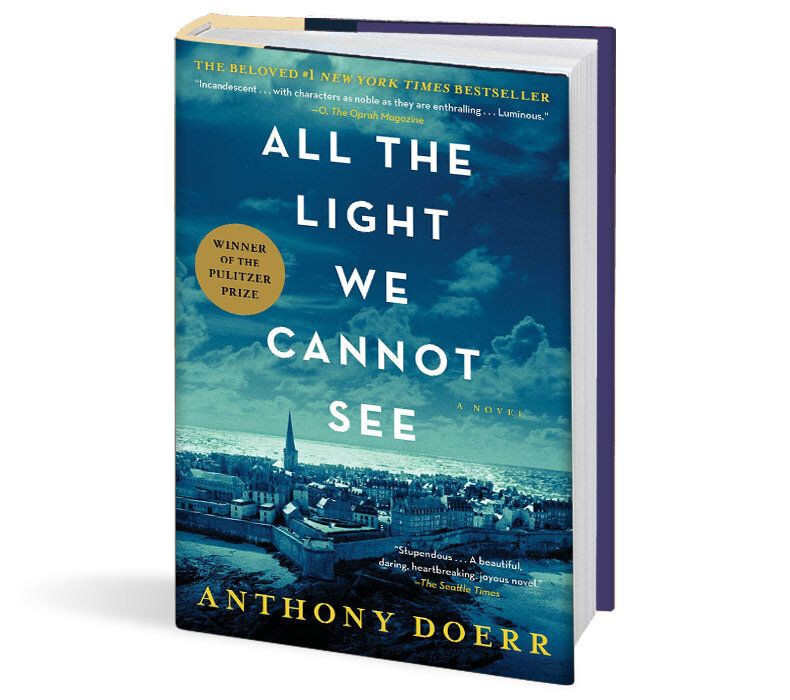
For the complete English EPUB, New York Public Library’s OverDrive record identifies Anthony Doerr’s novel, Scribner and ISBN 9781476746609. It lists EPUB ebook, OverDrive Read and Kindle Book. Borrowing requires an eligible card and an available loan. To see the prose immediately, BookBrowse’s authorized opening excerpt is free to read; its five sample pages are not the complete novel.
Get the complete novel with the right reading permissions
Kobo’s US edition matches the English ISBN above and specifies EPUB 3 with Adobe DRM. This is a paid, protected ebook. The US page displayed a notice requiring a US address when checked from a Singapore connection on November 23, 2026. Check your own storefront and account before purchasing; another store’s availability or protection policy should not be inferred from this one.
The publisher’s ebook page also links to the specific Kindle edition. A Kindle purchase is a route to authorized reading access, not evidence of permission to export an EPUB. We have not verified a subscription entitlement or EPUB export for that edition.
We have not verified an authorized public free download of the complete English EPUB or PDF, or a paid DRM-free edition of the original novel. A search result promising a file is not enough to establish either. The library option is a temporary loan, with eligibility and availability conditions; the Kobo option is a purchase. Neither is a public unprotected download, and an ACSM license file is not the book’s text.
If your library uses Libby, look up the author and exact title in that library’s catalog. The NYPL listing confirms an actual English EPUB edition, but it does not mean a card from another library will unlock NYPL’s copy. The free excerpt is the practical starting point while you check access or wait for a hold.
Read the opening at three different distances
The authorized sample begins with “Zero — 7 August 1944.” Its first small sections move from leaflets over a town, to approaching bombers, to Marie-Laure inside a house in Saint-Malo. The scale changes before you have settled into a conventional introductory chapter.
Try reading that sequence with one question: what information can reach a person here? A warning can cover a street without reaching everyone in the same way. A view from above makes the town look different from a room inside it. Marie-Laure’s model and her attention to sound offer another way to locate herself. These are distinct positions from which to know the same place.
That gives you a useful alternative to memorizing every street name. At each change of scene, identify the distance: above the town, within its streets, or inside a person’s immediate surroundings. Ask what becomes clearer at that distance and what disappears from view. You can do this using the opening sample, without looking up the ending or drawing a complete map of the plot.
A bookmark that survives a change of time
In his Q&A about the novel, Doerr explains how alternating between Marie-Laure and Werner creates suspense, while the spaces between short sections offer room to breathe. The book’s form is therefore part of its effect. Rearranging everything into chronological order before a first reading can remove a question the sequence deliberately leaves open.
Instead, keep a small bookmark with three entries:
| Entry | What to record | When to update it |
|---|---|---|
| Date | The date supplied by the current part heading | When the book supplies a new time marker |
| Person and place | Whose immediate situation you are following, and where | When the viewpoint or scene changes |
| Unfinished question | One thing that person is waiting for or trying to understand | Before you leave a scene that feels unresolved |
Do not invent an exact date where the text gives none. Do not turn the third column into predictions about who survives. A note such as “waiting for someone to return” preserves a situation without requiring a plot summary. When you resume reading, the note helps you recover the question that made you want to continue.
If two adjoining sections seem unrelated, allow the connection to remain uncertain for a while. Look for a repeated object, a contrast in what people know, or a similar action with different consequences. The point is to notice the arrangement, not to force every pair of sections into a neat symbolic match.
Readers coming from The Book Thief may find the distinction useful: recognizing an unusual narrator is one task; retaining your bearings when a novel changes time or viewpoint is another. Both reward keeping the page’s organization visible.
Beautiful fragments can still feel interruptive
The Goodreads responses read for this guide disagree about the structure. Lisa of Troy finds that the short sections help a long novel move. Chrissie finds the time shifts confusing, particularly when listening makes it harder to glance backward. A November 23 response from Shammy Shree praises the intersecting timelines and detailed writing. These are individual reactions, not a representative survey.
Use the excerpt to find out whether the prose invites you to linger. A fast chapter count is not the same thing as a fast reading experience. If you enjoy the imagery but repeatedly lose your place in time, try the bookmark above before increasing playback speed. If the wartime violence or emotional intensity feels too much, stopping at a section boundary is a reasonable choice.
Listen without flattening the headings
For this novel, the useful listening habit is a pause at a new part heading. Look at the date, then continue. At an ordinary short-section heading, check whether the person or location has changed. A synthetic voice may make a heading sound like one more sentence; keeping the text visible preserves information carried by the layout.
With authorized Kindle reading access, use the Kindle reading-page setup. The protected Kobo and library EPUB editions above are not verified for direct import into the EPUB workspace. That workspace requires a compatible DRM-free file you are entitled to use. For an immediate exercise, write your own three-line scene bookmark and listen to it in the free text reader, then return to the authorized sample.
Available device voices provide free reading without a CastReader account. AI voices require sign-in and follow plan limits; cloud voices send reading text for speech generation. Local file parsing and voice processing are separate. TTS is not the licensed audiobook performance, and this guide does not claim a full-book listening test.
Let the next section surprise you. You only need enough of a note to recognize the person and the unanswered question when the book brings you back.
Access and sources checked November 23, 2026. No purchase, loan, complete-novel download, import or full-book playback was performed.