The opening of Educated puts a school bus on the road below a child who will not board it. It also puts a small qualification beside a large statement about her family. That combination offers a useful way into Tara Westover’s memoir: follow the story, but keep the qualifications attached. An account of gaining an education is also an account of learning how to reconsider what you know.
For the complete English EPUB, Queens Public Library’s ebook record lists Educated: A Memoir, ISBN 9780399590511, with EPUB ebook, OverDrive Read and Kindle Book formats. You need an eligible library card and an available loan; a hold may be necessary. This is a complete-book borrowing route, not an unrestricted file available to everyone. We did not find a verified authorized public download of the complete free English EPUB or PDF.
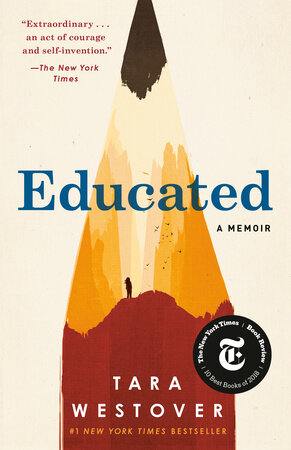
Choose the memoir, then choose the access route
The Kobo US listing for Educated matches that ISBN, language and Random House edition. It labels the download EPUB 3 with Adobe DRM. Buying it does not produce an unrestricted file for any EPUB reader. During our check, the US listing directed a visitor in Singapore to shop through the Singapore store; availability depends on country and account. We did not verify a paid DRM-free English edition.
To try the prose first, use the publisher’s free prologue excerpt. The excerpt and the publisher’s teaching materials are useful previews, not the complete book. A search result containing “EPUB,” a page count or a download button is not, by itself, evidence that the file is authorized, complete or even this memoir.
The library record’s Kindle Book option is another format choice for an eligible loan. Check the available fulfillment options before borrowing. It does not establish Kindle Unlimited access, permission to export an EPUB, or availability to readers outside the library’s service rules. Keep the distinction between a book you can borrow, a book you can buy and a passage you can read openly.
The small note worth stopping for
In the publisher’s prologue, the narrator describes a childhood outside school and official records. A broad statement about the family’s lack of medical contact carries a footnote acknowledging an exception involving her sister Audrey. Reading the sentence without the note makes the statement more absolute than the text actually leaves it.
Try this with your own copy: read the main sentence, then the note, then say in your own words what can still be claimed. The exception does not erase the larger childhood account. It changes its scope. That is a productive distinction to keep throughout a memoir, particularly when a vivid scene makes a general statement easy to remember.
You do not need to become an investigator of every family disagreement to notice how the writing handles knowledge. Stay with the words on the page: who remembers, who reports, who disagrees, and where the adult narrator qualifies an earlier understanding. A note that narrows a claim deserves as much attention as a sentence that makes it striking.
Memory, a story heard, and a conclusion reached later
The authorized opening of chapter 1 describes an image formed from a story her father told, rather than an event she personally witnessed. The image is vivid enough to resemble a memory. The narrator identifies that difference at the outset; the reader should not silently turn it back into eyewitness testimony.
A simple bookmark can help without interrupting every page. Use three headings:
- Remembered: what the narrator presents as something she experienced.
- Received: what she learned through somebody else’s story or explanation.
- Reconsidered: what she later understood differently, including a qualification or another account.
Put a brief note under a heading only when the distinction changes your understanding. Leave a question mark when the passage does not settle it. The purpose is to read the narrator’s handling of evidence, not to assign a verdict to every person in the book.
For a reading group, choose one passage where a new way of understanding something creates a relationship problem. Ask two separate questions: what became possible to think, and what became harder to say at home? Keeping those questions separate avoids reducing the memoir to a list of educational milestones. It also leaves room for the cost of change alongside its possibilities.
Why readers respond differently
The intensity is part of the reading decision. Debra’s three-star Goodreads response finds parts repetitive and wants more explanation. In a November 18 response, Marianne Lamontagne emphasizes the power of finding a voice and questioning received knowledge. These are individual reactions, not a representative survey, and the full reviews can disclose later events.
There are accounts of family violence and injury. A reader can value the memoir’s intellectual questions and still need shorter sessions. Nor does difficulty with a scene require a clinical diagnosis of the people involved. For discussion, begin with what the passage says and how the narrator frames it; distinguish an interpretation from an independently established fact.
If you are comparing this with Holden’s management of his listener in The Catcher in the Rye, preserve the difference in genre. A novelist’s first-person speaker and a memoirist making claims about lived experience are doing different work. Their interruptions and qualifications may both reward attention, but they do not have identical stakes.
Listen without losing the qualification
For a first listening exercise, use the prologue and pause at the footnote marker. Check where your reading app places the note before continuing. A voice can make the main sentence sound complete even when a qualification is waiting elsewhere on the screen.
If an eligible Kindle loan opens the book on a supported Kindle reading page, get CastReader and follow the Kindle read-aloud steps. Confirm the first highlighted passage and check how that edition handles notes. Protected library and Kobo files belong in their authorized compatible readers; they should not be uploaded as though they were unprotected EPUBs.
For your own three-column notes or a short passage you can lawfully copy, the free text-to-speech reader offers available device voices without sign-in. AI voices use cloud synthesis, require an account and have plan limits. TTS can help you hear a qualification you hurried past; it is not the authorized human-narrated audiobook.
Edition and access details checked November 18, 2026. No purchase, library loan, complete-book download, import or playback performed.