Molly Fitzgerald plans for disasters for a living. Reading her story calls for a different kind of preparation: keeping track of what a family knows, what it believes, and when an explanation becomes available. That is a useful way into Jodi Picoult's Hollow Bones without searching for its ending before you begin.
Need the complete English EPUB? This Mid-Hudson Library System record lists an EPUB ebook loan of Jodi Picoult's novel. An eligible library card and an available loan are required; this is not an unrestricted download. The paid alternative is Kobo's English edition, ISBN 9780593726266, explicitly labeled EPUB 3 with Adobe DRM. It cannot be imported directly into CastReader's EPUB reader.
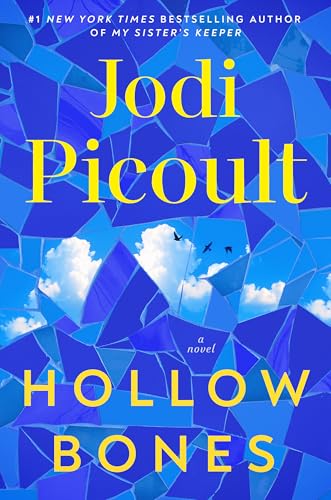
Start with the right Hollow Bones
The title alone is not enough. Searches also surface other authors' books with the same name. The library and Kobo records above identify Jodi Picoult, English, and the Ballantine/Random House ebook released on September 15, 2026. The author's official page separately lists November 5, 2026 for the UK release. As of this guide's October 29 check, that UK date is still ahead; a regional preorder is not evidence that a purchased file is already available.
For a library copy, sign in through your eligible library, borrow or place a hold, and follow its offered download or reading options. The catalog's EPUB label identifies a format, not a DRM-free file or guaranteed availability. If your library is outside this system, look for the same author and title in its catalog rather than trying to use somebody else's card service.
Kobo is a purchase page, not a direct EPUB download. An account, purchase and an eligible store region are needed. Follow Kobo's account export instructions after purchase; an ACSM authorization file, if supplied, is not the novel itself. Adobe protection requires a compatible authorized reader.
If you prefer Amazon, the author links to this specific Kindle edition. Purchasing Kindle reading access is separate from any ability to export EPUB; we have not verified EPUB export for this edition. For a free first look, open the official HTML excerpt. The author's book-club materials are discussion aids, not the complete novel.
We have not verified an authorized, openly downloadable free complete English EPUB or PDF. This guide checks public records and previews, not a purchase, library loan, complete-file download or playback test.
The question behind Molly's emergency plans
Picoult's official synopsis establishes the wound at the center of the story: Molly's mother went to the World Trade Center on September 11, 2001, when Molly was a baby, and did not return. As an adult, Molly leads Rhode Island's emergency-preparedness work. Her husband Jesse is a police polygraph expert. Their relationship and family history unfold across past and present.
That setup invites a question more useful than guessing a twist: what is the difference between having a plan and feeling safe? Keep it open while reading. A character's explanation can be emotionally convincing without being the final account of an event.
Expect grief, family loss, mental-health themes and difficult material concerning motherhood. If those subjects are especially close to you, sample the opening and check the author's information before choosing it for a relaxing read. A novel's portrayal is not a substitute for clinical guidance.
A timeline that preserves the surprises
Avoid building a complete chronology from online plot summaries. Instead, make a small note only when the text supplies a new time or perspective. Three fields are enough:
- When and whose perspective: use the book's own date or scene cue, not an inferred date you might later mistake for fact.
- What this person currently believes: record a short phrase rather than declaring that belief the truth.
- What remains unanswered: keep one question for your next session.
When a later scene changes your understanding, add a second entry instead of erasing the first. The difference between those entries is part of the reading experience. You can then discuss why an earlier explanation felt persuasive without revealing a later event to a reader who has not reached it.
For a book group, agree on a stopping point before comparing notes. Ask, “Which uncertainty is this character trying to control?” and “Who has information the other person lacks?” Those questions work even when members disagree about a decision. Save the author's discussion questions for after finishing, since discussion material can disclose later developments.
Why the pacing may work differently for different readers
The reader responses we examined show a real divide. Kail Lowry's October 13 review emphasizes emotional impact and revelations. Emily May's September review finds the pacing uneven and the number of issues crowded. These are individual reactions, not a representative survey or our claim to have read the entire novel.
If emotional reversals keep you engaged, the questions in your timeline may be enough to carry you forward. If many threads make you lose orientation, read a sample before committing and plan shorter sessions. Feeling uncertain about a character is different from forgetting which period a scene belongs to; a brief note can help with the latter without resolving the former.
Hear the timeline without losing the text
For the protected library and Kobo editions, use their supported reading systems. A compatible DRM-free file is needed for CastReader's EPUB workspace; the Kobo copy verified here does not meet that condition.
With access to the linked Kindle edition, download CastReader and use the Kindle reading-page workflow. You still need access to the book through Amazon. This reads the supported page rather than promising an EPUB export. At a change of time or viewpoint, pause and check the visible heading before continuing.
An easy companion exercise is to read your own timeline notes through the free TTS tool. If the note is confusing when heard aloud, clarify who is speaking or when it takes place before returning to the next scene. An available device voice is free without an account; AI voices require sign-in and follow plan limits, and cloud voices send reading text for speech generation.
Readers interested in a different story about professional competence and experiences that are hard to explain at home can try The Women. Its war-and-homecoming structure offers a useful comparison, with separate edition and listening advice.
Let the book reveal the family history at its own pace. The purpose of a timeline is to help you notice a changing explanation, not to solve the novel before you read it.