Rebecca is a good book to approach with a question rather than a plot summary: how much of another person's life can you know from the people who remain behind? A young, unnamed woman marries Maxim de Winter and arrives at Manderley, where his first wife still seems to set the rules. The name on the cover belongs to that first wife, not the person telling you the story.
If you came for an English EPUB, start with the library ebook record, which lists EPUB and online reading, or the Little, Brown edition on Kobo, which is a paid EPUB with Adobe DRM. We did not verify an authorized, publicly downloadable complete free English EPUB on October 22, 2026. The borrowing and purchase routes below explain what you actually receive, before the spoiler-free reading advice.
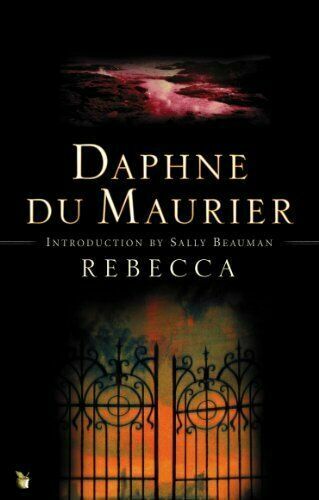
First, find the book rather than a misleading download button
Library borrowing: East Chicago Public Library's English Rebecca ebook identifies Daphne du Maurier, Little, Brown and Company, and ISBN 9780316323703. It lists EPUB ebook, OverDrive Read and Kindle Book. You need an eligible card for that library to borrow there; otherwise search the ISBN in your own library's Libby catalog. Holds, loan periods and available formats depend on your library. A catalog entry does not guarantee an immediately available copy or a DRM-free file.
A purchased EPUB: Kobo's Little, Brown edition specifies English, ISBN 9780316323703, and EPUB 3 with Adobe DRM. This is a purchase option, not an open download. Read it in a supported app or use the retailer's approved export process. An ACSM authorization file is not itself the novel's EPUB, and neither it nor a protected EPUB can be dropped directly into CastReader's unprotected-file reader.
Kindle instead: the publisher's ebook page links to this specific English Kindle edition. Check availability and price in your Amazon region. A subscription badge, trial offer or Kindle purchase is not proof that you can export an EPUB. We did not buy or download this edition.
There is an especially confusing search result: Standard Ebooks has a Rebecca page, but it currently gives a future US public-domain date, January 1, 2034, rather than a downloadable ebook. Its “free ebooks” site branding does not turn that particular listing into a free file. We checked the page itself, not just its search snippet.
Also check that a school edition is the original novel. A language-learning retelling can be a useful book, but “Level 5,” a different credited reteller or a much shorter text may indicate an adaptation. Choose it deliberately, not because its PDF appears before the full novel in search.
Let the unnamed narrator be unnamed
You are not missing a page when the narrator's first name fails to appear. The opening setup places her in a world where other people seem more established, articulate and entitled to belong. Keeping track of who gets named, who gets remembered and who gets to describe the past is part of the reading experience.
For the first stretch, you only need four anchors:
- The narrator: the new Mrs de Winter, telling the story from her own perspective.
- Maxim de Winter: her husband, whose previous life at Manderley she does not fully know.
- Rebecca: the first Mrs de Winter, whose absence is felt through other people's memories and the house itself.
- Mrs Danvers: the housekeeper, closely associated with the household Rebecca left behind.
That is enough orientation. Searching for a character biography is likely to reveal more than you need. Instead, ask whether a passage describes something the narrator has seen, something she has been told, or something she imagines. The categories can feel similar when you are inside an anxious person's account, but they are not the same kind of evidence.
Read it as suspense before expecting a love story
The publisher describes Rebecca as psychological suspense. That is a useful expectation to carry into a book often shelved alongside romance. A marriage can drive a story without being a model relationship or a promise of emotional comfort.
The Goodreads review samples we read show why this distinction matters. Jessica yeung responds to the atmosphere and autumnal mood; Anne finds the mystery more successful than the romantic relationship. These are contrasting individual readings, not a consensus. Both linked reviews discuss plot details, so save them until afterward if you want to go in blind.
Our suggestion is to make room for discomfort. If a conversation leaves you uneasy, do not rush to decide whether a character is “good” or “bad.” Notice who has social power, who is trying to please whom, and whose version of events goes unchallenged. You can admire the construction of a suspense novel while questioning the behavior inside it.
This is not a sequel or a series that needs a reading-order chart. Nor do you need to watch an adaptation first. Reading the novel before comparing screen versions lets its own narrator control what you know and when you know it.
Three notes worth keeping beside Manderley
Rather than a chapter-by-chapter explanation that risks spoiling the mystery, try a small notebook with three headings:
A detail in the house. Record an object, room or routine that seems to carry Rebecca's presence. Add who interprets it for the narrator. The setting is useful evidence, not just decoration.
A prediction the narrator makes. When she imagines what someone will say or think, mark it as a prediction. Later, check whether it happened. This helps you hear the difference between her fear and the events on the page.
A statement about the past. Write down who said it and what they might know firsthand. You do not need to solve the book early; you are simply preserving the information available to you at that point.
Keep each note to a sentence. Too much annotation can flatten a novel whose effect depends on sustained atmosphere. If you want a genuinely free classic with a related house-and-identity reading question while waiting for a library hold, our Jane Eyre guide includes complete English EPUB and HTML links. It is a different novel, not a substitute edition of Rebecca.
Listen through the edition you can actually open
For an authorized Kindle copy, use CastReader's Kindle read-aloud instructions: install the appropriate CastReader version, sign in to your own Kindle library, open the book on a supported reading page, then start the reader. Begin with a paragraph you can see and confirm that it is the paragraph being spoken. This route does not require exporting or removing protection from the ebook.
The protected Kobo edition and a library loan should stay in their supported reading environments. Do not upload an ACSM file and expect it to become an audiobook. If you separately own a compatible DRM-free EPUB, the EPUB workspace is the file-reading route, but the Kobo edition identified above is not that kind of file.
For speech settings, a device voice is free where supported. CastReader AI voices require an account and have plan limits; cloud voices send reading text for speech generation. A locally parsed file and cloud speech are different steps. TTS also differs from buying a professional narrator's audiobook.
For Rebecca, keep a slower pace when the narrator moves from an actual conversation into something she imagines. If you lose track, pause and return to the sentence where the shift began. That is more useful than pushing on at a speed that blurs the very distinction the story asks you to notice.
Get the right edition first; preserve the uncertainty second. You can enter Manderley with a reliable ebook link and a few questions about voice, memory and power—without reading an ending explanation before the story has had a chance to work.