Gregor Samsa’s first problem is extraordinary; the obligations waiting outside his room are painfully ordinary. That mismatch gives The Metamorphosis its force. A useful first reading follows what other people expect of him, rather than stopping at every paragraph to solve the transformation.
You can begin with David Wyllie’s complete English EPUB, free from Project Gutenberg. Prefer a webpage? Open the full HTML at the start of the work, then continue to Part I. Neither link requires a purchase or account. This is the novel’s text, not a study guide or sample.
There is one important edition detail: Gutenberg marks this translation copyrighted and provided with the copyright holder’s permission. Free access does not make every English translation public domain. Follow the notice supplied with this particular file; outside the United States, check local rules as the source directs.
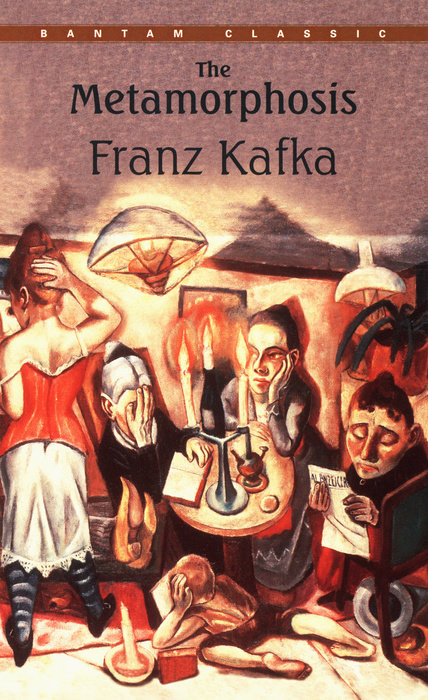
Choose a translation before choosing a voice
A familiar title and the same main character do not mean two English files contain the same sentences. Gutenberg ebook 5200 explicitly credits David Wyllie. Check the translator on the title page of any other edition you plan to use alongside it.
For a class or reading group, use the assigned translation when quotations and page references matter. For a personal first reading, the freely available Wyllie text lets you try the work immediately. There is no need to buy an annotated edition before discovering whether Kafka’s manner interests you.
If a human-recorded audiobook and your ebook seem to disagree word for word, check their translators and whether either is abridged before treating the mismatch as a playback problem. TTS offers a different advantage here: it speaks from the text you have opened. It is not the performance of a particular audiobook narrator, and it does not supply a new literary translation.
We downloaded the English EPUB, checked its title and translator metadata, its three narrative parts and its text files, and found no EPUB encryption file. That is a source-file check, not a claim that we listened to the whole book or tested every device. The verified download is EPUB; this guide does not supply a separately verified PDF.
Three questions for three parts
The work has three parts, which make useful stopping points. You need not finish a part in one sitting. Keep a brief note about where you stop, then return to the same edition.
In Part I, follow the priorities. When Gregor thinks about his situation, what practical responsibility occupies him? When someone speaks through a door, what response do they want? Try recording a question and the answer it actually receives. You can do this without deciding what the whole story symbolizes.
In Part II, follow the arrangements. Notice how the household handles space, food and contact. Write down one action before describing it as care, fear or convenience. More than one interpretation can remain possible. The distinction between what someone does and why you think they do it is worth preserving.
In Part III, revisit your earlier notes. Has your view of a family member changed? Which passage changed it? Leave the ending to the text rather than looking for a definitive explanation midway through. A final paragraph can feel different when you remember the practical details that preceded it.
These are prompts for your reading, not a decoding key. They work on a phone note, a sheet of paper or a discussion with another reader. You do not need a large annotation system to give a short book sustained attention.
Why it can feel moving, funny and frustrating
The responses checked on Goodreads were not uniform. In an October 17 review, Tash Lynch appreciated the questions about human value while finding parts unsettling. Another recent reader, BookLover87, liked the opening but lost the thread afterward. Those reactions suggest a useful choice: continue for the relationships and discomfort, rather than expecting the initial premise to turn into a conventional explanation.
A calm reading voice can help you notice the distance between a strange event and an ordinary-sounding response. It may also make the atmosphere feel more uncomfortable. Pause when you want to; the book’s short length is not an instruction to rush through it.
For a different treatment of transformation, Dr Jekyll and Mr Hyde offers another short text with a free EPUB. Read it as a comparison after Kafka, not as a guide to what Kafka’s story must mean.
Hear this exact text with CastReader
Open the EPUB workspace, select the downloaded Wyllie file, and find Part I after the title and source notices. Choose an available device voice and check the first highlighted passage. The local device-voice path is free and needs no account; the original file is parsed in the browser.
For the webpage route, download CastReader, open the Gutenberg HTML in a supported browser, and locate Part I before starting. If a previous session returns you to the middle, reset the position in the text. The link identifies the beginning of the work; it is not a command to erase saved reading progress.
Keep the page visible for your first few paragraphs. Adjust the speed only after you can comfortably follow the sentences, and use the part boundaries for pauses. If you select a CastReader AI voice instead, sign-in and plan limits apply, and reading text is sent to the cloud speech service. CastReader does not decrypt protected store or library editions, and this reading workflow does not create an MP3 audiobook file.
Edition and access details checked October 17, 2026.