Already knowing what the names “Jekyll and Hyde” suggest does not mean you have experienced Stevenson’s story. Much of its interest lies in how a cautious lawyer assembles testimony, visits, letters and silences. Read it as a problem of evidence, and the familiar premise becomes a reason to watch the details more closely.
Download the complete English EPUB from Project Gutenberg, or open “Story of the Door,” the first chapter, in your browser. Both are free and require no account. The EPUB is an unencrypted file of the complete novella, not a sample or summary. We downloaded it and checked its English metadata, chapter sequence, opening and ending; we did not test an entire book-length playback.
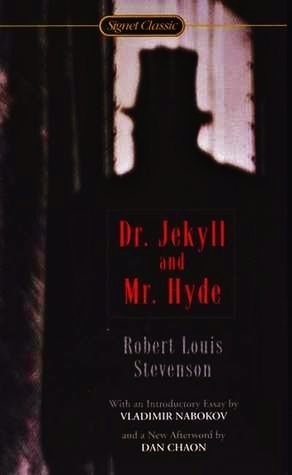
Pick the file or the page, then start at the actual beginning
The Gutenberg record, ebook 43, identifies Robert Louis Stevenson and the English text. The EPUB link above downloads a file of about 298 KiB, with no Adobe DRM or ACSM step. It contains ten chapters. Gutenberg marks the work as public domain in the USA; readers elsewhere should check the law where they are. That status should not be assumed for modern introductions, translations or illustrations.
For offline reading or an EPUB reading app, save the .epub file. For the quickest start on a computer, open the chapter-one HTML link. The ordinary ebook landing page includes download options, licensing information and a contents list before the story, so the chapter anchor saves you some navigation. If you wanted a PDF, the checked record’s ready-made reading choices are EPUB and HTML; the HTML page can also be printed through your browser. A browser-created PDF is not a separate publisher edition.
Prefer to listen? Open the CastReader EPUB reader, choose the downloaded EPUB and locate “Story of the Door.” Select an available device voice for no-login web reading, then start with a short passage. Before continuing, confirm that the text begins with Mr. Utterson, the lawyer. A previous reading position or an unexpected extraction start should be corrected before you settle in.
Alternatively, install the appropriate CastReader desktop browser extension, open the first-chapter HTML link, and start reading from the opening paragraph. The extension route reads the webpage; it does not import the local EPUB. Chrome, Edge and Firefox extensions cannot import local EPUB files. The web EPUB reader and supported mobile apps provide the file-reading route.
Four people to keep straight before the mystery develops
| Name | Your early point of reference |
|---|---|
| Mr. Utterson | The lawyer whose concern for a friend guides the investigation. Much of what you learn arrives through his inquiries. |
| Mr. Enfield | His walking companion, who tells the disturbing story associated with a door. He is not another name for Utterson. |
| Dr. Henry Jekyll | Utterson’s friend, whose arrangements and behavior prompt questions. |
| Dr. Lanyon | Another doctor in the same social circle, with his own history and disagreements. Do not merge the two doctors when listening. |
Poole is Jekyll’s servant; Hyde is the figure whose connection to Jekyll everyone is trying to understand. You need no elaborate family tree. The challenge is to track who has seen something personally, who is repeating a story, and who refuses to explain.
Try one line of notes after each chapter: “Utterson thinks ___ because ___.” Leave the second blank if he is relying on habit, social standing or a wish to protect someone. This small exercise shifts attention away from guessing the famous secret and toward the novel’s handling of credibility.
A four-session plan that preserves the document sequence
This is a suggested division by narrative task, not a claim about a particular audiobook’s duration:
- Chapters 1–3: meet the witnesses and notice the significance of doors, names and legal arrangements. Separate an observation from an explanation offered for it.
- Chapters 4–7: watch the evidence become harder to reconcile. Keep a short list of dates and visits if you are listening while doing something else.
- Chapter 8, “The Last Night”: give the scene an uninterrupted session. Return to the text if physical movement between rooms becomes difficult to picture.
- Chapters 9–10: read the final accounts in the printed order. Notice the change in whose words you are hearing and compare those accounts with your earlier notes.
You can of course read the whole novella in fewer sittings. The advantage of these breaks is that they keep changes in evidence and voice visible; they are not assignments to complete on a fixed schedule.
What readers who already know the premise notice
Recent reactions illustrate why expectations matter. In an October 12 review, Audrey says familiarity reduced the horror and that names and titles could be confusing. Jose Martinez also found the book different from its popular-media image. Adam Allegrezza, by contrast, found it especially thought-provoking among the familiar monster classics. These are individual accounts, not a representative rating study.
The character map and session plan above answer two practical problems those reactions raise: losing track of speakers and expecting constant physical horror. There is violence, but the atmosphere also depends on respectable people trying to manage disturbing information. Pay attention to what a person is willing to put in writing and what they will only imply in conversation.
After finishing, ask whether knowing the premise made you too quick to dismiss the witnesses’ uncertainty. You may understand the broad situation before they do while still missing the reasons they hesitate. That is a worthwhile rereading question even if the ending itself holds no surprise.
Make the listening aid serve the text
Begin around ordinary speaking speed and keep the page visible for the first exchange between Utterson and Enfield. If a voice makes two names sound too similar, slow down or switch voices. At the final accounts, check the chapter heading before continuing so that you know whose perspective has taken over. Voice quality and pronunciation depend on the selected language, voice and device.
The free web option uses available device voices without signing in. CastReader AI requires an account and has plan limits. The original EPUB is parsed locally in the browser; using cloud voices sends the reading text to the service. The tool does not turn the book into a downloadable MP3. For the shortest route back to the story, use the first-chapter HTML or the EPUB workspace.
Edition, download and source details checked October 13, 2026. This guide refers to Stevenson's original English novella, not a simplified retelling or the additional material in a modern print edition.