To Kill a Mockingbird begins with a disagreement about where a story starts. Before deciding what Scout learns, notice that she is also choosing how to explain the past. Reading the childhood experience and the later telling together makes the opening more interesting than treating it as background to hurry through.
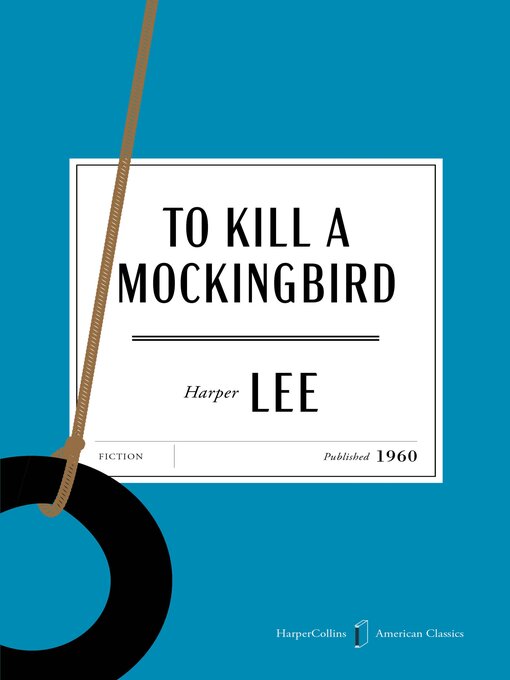
If you are looking for the book, Digital Downloads / OverDrive lists the complete English EPUB, ISBN 9780062368683. It requires eligibility for a participating library and an available loan. Kobo’s matching English edition is a paid EPUB with Adobe DRM. We have not verified an authorized public download of the complete free English EPUB or PDF, or an unprotected commercial English edition.
What the available formats actually give you
| Source | Full book or supporting material? | Access boundary |
|---|---|---|
| Digital Downloads library record | Complete English novel; EPUB ebook, OverDrive Read and Kindle Book; ISBN 9780062368683, approximately 631 KB | Eligible library card, loan availability and lending period. Search the ISBN in your own Libby catalog if this library does not serve you. |
| Kobo US: To Kill a Mockingbird | Harper / HarperCollins English EPUB 3 (Adobe DRM), same ISBN, approximately 616 KB | Paid, protected edition. The US page directed our Singapore browsing session to shop from Singapore. Check your own country’s store; checkout was not tested. |
| Authorized opening excerpt at BookBrowse | Free sample, reproduced by permission of Harper | An introduction to the prose, not the complete novel. |
| National Endowment for the Arts reader resources | Ten-page PDF about the book and its context | A discussion resource, not a full-book PDF. It discusses later events. |
The official book site distinguishes ebook, print and audio editions. Check the format beside the ISBN before following a retailer link. An audiobook, enhanced ebook, adaptation or study guide may share the familiar title while giving you a different reading experience. The protected EPUB above is not a file we purchased, downloaded or imported.
Why start with an argument about the beginning?
The authorized opening first mentions Jem’s injured arm, then looks back from years afterward. Scout and Jem offer different starting points for the chain of events; their disagreement reaches beyond one summer into family history. You know an outcome before you know the route to it. The opening therefore invites attention to explanation, not simply suspense about what happens next.
For this first passage, make two short notes: what happened to the children and how the narrator now connects those events. A later perspective can organize experience without making the child understand everything at the time. When an explanatory sentence feels older than the child in the scene, consider its place in the telling before treating it as an error in age.
Do not solve the opening by searching for the circumstances of the injury. Let your copy supply the connection in its own order. Keep a bookmark at the first page and return when the novel itself makes you reconsider it. That is enough preparation; a plot timeline would remove a question the opening deliberately leaves unanswered.
Keep observation, other people’s claims and explanation apart
For any scene that troubles or puzzles you, try three marks in the margin: seen, said, and inferred. Use “seen” for an event the narrator reports, “said” for a claim another person makes, and “inferred” for a conclusion you or the narrator draws. These marks are prompts for discussion, not a system that can mechanically certify truth.
Ask whose account would be needed to test a claim. A sympathetic speaker can still have a limited view. Equally, a reader’s disagreement with a character does not make every reported detail unreliable. Keep the specific claim in view instead of turning the whole novel into a choice between believing or rejecting one person.
This matters when discussing racial injustice. The novel contains racist language, violence and a rape accusation; reading aloud can make that language more immediate. A class or book group can examine its function without requiring every participant to perform it. Leave room to question whose experience gets explained by others and whose voice receives sustained attention.
Admiration and criticism can share the same discussion
Brina’s Goodreads review values the family relationships and revisiting the book as an adult. Leynes’s review sharply challenges its centering of white characters. In a recent November 19 response, Cosette Rentz appreciates Scout’s charm but finds the early pace slow and wants more attention to Black voices. These are selected readers’ reactions, not a representative survey; the linked reviews contain spoilers.
You do not have to choose between finding a passage moving and questioning its limits. Bring one scene to the discussion, identify what it lets you know, and name what remains outside its perspective. For a later comparison, James makes the relationship between a speaker and his audience a different, explicit reading problem. The books have distinct histories and narrative projects; one is not a substitute for the other.
Use listening to locate a shift in the telling
Start with a short passage you can lawfully copy into the free text-to-speech reader. Choose a device voice to read without a CastReader account. When the prose moves from a scene into explanation, pause and mark the sentence. Listen again with the text visible: a synthetic voice may smooth over a distinction that punctuation makes clearer.
If your eligible library loan includes Kindle Book and opens in a supported web reader, follow the Kindle reading route after getting CastReader. This works with accessible page text rather than exporting the book. Cloud AI speech requires sign-in, sends text for synthesis and has plan limits.
The protected library or Kobo EPUB belongs in its authorized reading app. Do not upload an ACSM license or expect the EPUB workspace to unlock Adobe DRM. That workspace requires a compatible, lawfully obtained unprotected file; we have not verified one for this guide.
Edition and access details checked November 19, 2026. No purchase, library loan, complete-book download, import or playback performed.