The entrance to a cave is an opening to us. To the young animal inside it, it can look like another wall—one made of light. In White Fang, that difference lets Jack London tell a discovery twice: we understand what the cub is approaching before the cub understands what he can pass through.
Get the complete free English EPUB from Standard Ebooks. We downloaded this edition and checked its five parts and 25 story chapters, opening and ending, and absence of an EPUB encryption file. It contains White Fang itself, not an abridgment or a volume that requires you to buy The Call of the Wild as well.
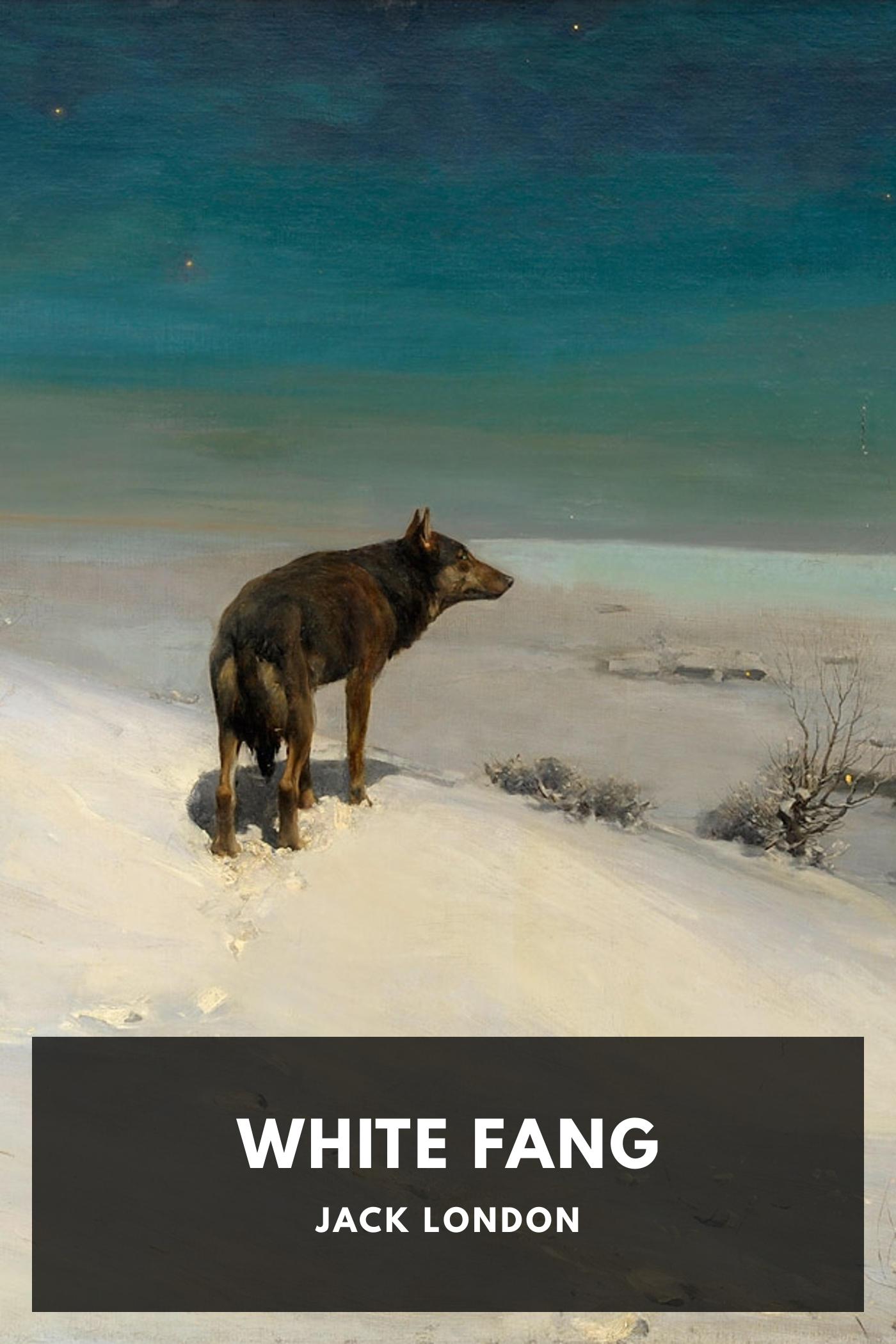
The edition page provides the publication and source information. Access is on a US public-domain basis; check the position in your country before downloading. Modern introductions, translations, illustrations and adaptations may have separate rights. This English text is not a promise that every recent edition carrying the same title is free.
The story begins before White Fang can tell us anything
Part I follows the human travellers and their dog team in a hungry northern landscape. The viewpoint then changes. Part II brings the she-wolf’s life and the cub’s early experience into focus. If the opening seems unlike the animal story you expected, you have not downloaded the wrong book.
That opening also changes what the reader knows. People who fear the wolves see a danger advancing on them; later, hunger and survival become pressures within an animal’s life. The shift does not make either perspective a complete account of the other. Keep that distinction when the narrator explains an action you first encountered as a threat.
For a first reading, resist turning every episode into a general moral. Choose one practical problem instead: what can this body sense, what has it already learned, and what surprises it? Those questions work before you know how the larger story ends.
A wall, a fall and a revised expectation
Start the close-reading exercise in Part II, chapter III, “The Grey Cub,” then continue into chapter IV, “The Wall of the World.” The cub has encountered solid boundaries, but the bright boundary ahead behaves differently. He also has no experience of the drop beyond the cave’s lip. A view that a human reader recognizes immediately is still something his movements must discover.
Follow one expectation through three moments:
| Moment | What to notice |
|---|---|
| Inside the lair | Which experiences make a boundary seem solid or an approach seem dangerous? |
| At the entrance | What changes when the apparent wall does not stop his nose? |
| Beyond the lip | What does his body learn that looking alone has not taught him? |
The narrator supplies concepts that the cub does not formulate in human words. This is where the reading becomes more interesting than simply imagining a small person in fur. Separate the sensation from the narrator’s explanation of it. Then ask how the next movement changes. London can describe learning without giving the animal spoken dialogue.
Later in the same chapter, moving creatures and unstable objects create more surprises. Rather than list every lesson, pick one failed expectation and look for its revision. A short passage becomes an account of changing knowledge, not just another danger survived.
Know which “chapter IV” your contents menu means
The chapter numbers restart in each part. Use part + chapter + title, not just “chapter four,” in reading notes or a shared discussion. The downloaded edition’s story structure is:
| Part | Chapters | First chapter |
|---|---|---|
| I | 3 | The Trail of the Meat |
| II | 5 | The Battle of the Fangs |
| III | 6 | The Makers of Fire |
| IV | 6 | The Enemy of His Kind |
| V | 5 | The Long Trail |
The final story chapter is Part V, V, “The Sleeping Wolf.” Publisher information and licensing material after it are not additional story chapters. Knowing this helps distinguish a complete file from an extract without consulting an ending summary.
A companion to Buck, with harder questions than a pet story
In The Call of the Wild, Buck moves away from domestic life toward the wild. White Fang takes a different direction, exploring the possibility of trust after harsh experience. They are companion novels, not sequential volumes that must be read in a prescribed order. Comparing how each animal learns is more useful than expecting the same adventure with a new name.
The Goodreads discussion contains markedly different reactions. Miranda Reads appreciates the combination of pain and warmth, while Jemima Pett finds the cruelty difficult to revisit. A recent review by Julia Waite questions whether the themes sustain a novel’s length. These responses help identify reading choices, not a consensus.
There are beatings, dog fighting and animal deaths, as well as racist language and hierarchies in London’s depiction of people. For a shared reading, preview the material rather than treating “classic animal story” as an age recommendation. You can admire the precision of an animal’s sensory experience while questioning the human assumptions imposed around it.
Return to the cave with text and sound together
After obtaining the compatible unprotected file where it is lawful for you, open the EPUB reading workspace and locate Part II, IV. Keep the text visible while listening to the passage at the cave’s entrance. Notice when the narration explains a sensation in terms the cub himself could not use.
A device voice can read locally without sign-in. Cloud voices require an account and have plan limits. A synthetic voice is a reading aid, not a dramatized recording of this animal’s experience. Pause after the first fall and describe what the cub expected in your own words; then reread what changed.
Access and edition details checked November 20, 2026. The Standard Ebooks EPUB was downloaded and structurally inspected. No full-book import or playback performed.