You can get the complete English Pride and Prejudice without buying an ebook. Standard Ebooks offers a free compatible EPUB, and Project Gutenberg provides an illustrated EPUB 3. Both contain Jane Austen's novel, not a chapter sampler.
The more interesting obstacle may come after the download. If the opening seems to be nothing but people talking about marriage and invitations, listen for what each conversation lets someone obtain—or avoid saying. The small social events are where the conflicts become visible.
Choose your free copy
For a clean reading copy: open the Standard Ebooks edition page. Its compatible EPUB download is a convenient choice for a general EPUB reader. The edition uses consistent typography and contains all 61 chapters. The file we checked has English metadata and no EPUB encryption manifest.
For an illustrated alternative: use Project Gutenberg's book record, No. 1342. Choose its EPUB 3 with images, or use the other formats linked on that record. The illustrated file is larger, so the edition page is useful if you want to choose another download instead. We also checked the downloaded EPUB's title, author, and English metadata.
Neither source required an account or payment to retrieve the public file. Both describe availability under U.S. public-domain rules; readers elsewhere should check their local copyright status. A modern introduction, translation, or adaptation can have separate rights even though Austen's original novel is public domain.
Looking for a PDF specifically? These links are verified full EPUB downloads. An EPUB usually fits a phone more comfortably because the text can reflow. Do not mistake a publisher's reading-group PDF or an abridged school handout for the complete novel merely because it has the right title.
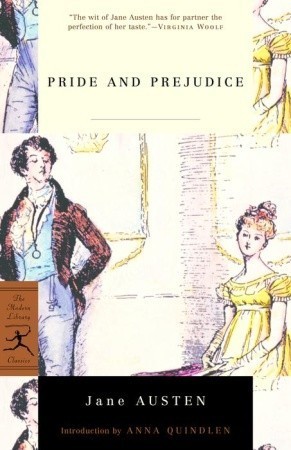
Read the first conversation as a negotiation
In chapter 1, Mrs. Bennet brings news of a wealthy new neighbor. Mr. Bennet responds as though her intentions are a puzzle, even while she thinks they should be obvious. On the surface, they are discussing a visitor. Underneath, she wants him to make a social introduction that might help their daughters, and he enjoys making her state the purpose.
This is a useful entry into Austen's comedy: what people say and what they want are not always identical. You do not have to admire either parent to notice the different ways they use the conversation.
Try reading the exchange aloud, or hearing it once through TTS while following the text. Where does a reply answer the question? Where does it deliberately sidestep it? The opening becomes more lively when you hear the timing rather than treating every sentence as formal exposition.
At the assembly, separate the event from the verdict
Chapter 3 introduces a social setting where observation quickly becomes reputation. Bingley's willingness to join in matters. Darcy's refusal to dance and an overheard remark matter too. Elizabeth has a concrete reason for a bad first impression; a reader still has room to ask how much that impression establishes.
For a first read, keep three layers apart:
- What happened: an invitation, refusal, remark, or visible action.
- Who heard or saw it: someone present, someone repeating it, or someone interpreting a report.
- What it is taken to mean: pride, interest, dislike, good manners, or poor judgment.
This is not a request to solve the characters in advance. Let an impression remain an impression until the story gives you something more. Searching for character explanations too early can replace that experience with somebody else's knowledge of the ending.
Why the house matters as much as the dances
By chapter 13, Mr. Collins's letter makes a practical issue harder to ignore: the inheritance arrangements for Longbourn put the Bennet family's future housing in question. This is a specific feature of the family's estate, not a claim that every woman in the period was unable to own property.
It also complicates a purely comic view of Mrs. Bennet's anxiety. Her manner may be ridiculous, but the security she wants for her daughters is not imaginary. Meanwhile, the family's different reactions to Collins's letter show how a person can reveal themselves before arriving in the room.
You can follow this without memorizing a social-history textbook. At each new visit or proposal, ask two questions: What does this person want? What can this person afford to refuse? Those questions preserve the humor while making its pressures easier to see. The passages discussed here come from chapters 1, 3, and 13 of the free text; this is an opening companion, not a plot summary of the ending.
If the pace feels slow, that is a useful preference to notice
The Goodreads record showed a 4.30 average from more than five million ratings on October 8, 2026. That large audience contains different reading experiences. Yun's response describes getting past the intimidation of approaching a classic. Karen's more mixed response finds the romantic experience less compelling.
In a recent English review, Olivia Jackson enjoyed the central relationship but still found some passages slow. These individual comments suggest a practical choice, not a consensus: give the dialogue room to work, but do not assume you must love its pace because it is famous. Full review pages may reveal later events.
Listen while keeping Austen's sentences in view
The free, unencrypted EPUBs above are suitable candidates for the CastReader EPUB reader. Download the file, open it in the reader, and select an available English device voice. Device voices work without an account. The browser parses the original file locally; choosing a cloud AI voice sends reading text for speech processing and requires sign-in with plan limits.
For the opening conversation, start near normal speed and follow the visible dialogue. Pause at a speaker change if a voice makes two characters sound too similar. TTS helps you hear syntax, but it does not automatically supply an actor's interpretation of irony.
You can also put your own short chapter notes into the free text-to-speech tool before resuming. A note such as “Elizabeth has heard this; Jane has been told that” is more useful than a list of conclusions borrowed from a spoiler-filled summary. The download page lists current device options; a browser extension is not the local EPUB importer.
Sources and edition links checked October 8, 2026. Public EPUB files were downloaded and their structure checked; this is not a claim of full-book playback on every device.