Download The Odyssey as a free English EPUB, or open Book I directly in your browser. Both links lead to Samuel Butler's complete prose translation at Project Gutenberg: all 24 books, no purchase or account, and no Adobe DRM.
One detail will save you a surprising amount of confusion: Butler calls Odysseus “Ulysses,” Athena “Minerva,” and Zeus “Jove.” You have not downloaded the wrong story. This guide explains that translation choice, why the hero does not immediately take center stage, and how to listen without accidentally starting in the translator's preface.
What is in this free download?
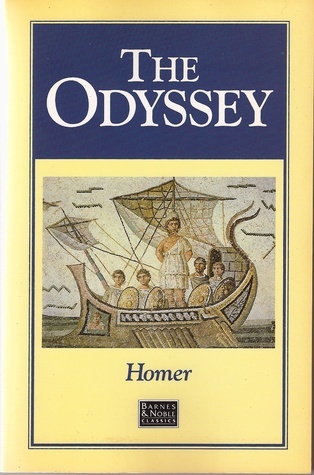
The Gutenberg catalog record, number 1727, names Homer as author and Samuel Butler as translator. It is an English prose rendering of the poem, not a children's abridgment, movie novelization, or modern verse translation.
We downloaded and checked the EPUB package on October 21, 2026: its metadata identifies English and Butler, and the text contains Books I through XXIV. It is an actual EPUB file, not an ACSM token, PDF preview or download-manager installer. This was a file and contents check, not a claim that we played the entire book in CastReader.
- EPUB 3 download: save this for an EPUB reader or the CastReader EPUB workspace.
- Complete HTML text: read on the web, with contents and chapter links.
- Start at Book I: skip the file's introductory material when you want the story itself.
Gutenberg labels this edition public domain in the USA. Readers elsewhere should check local copyright rules. An ancient original does not make every modern translation free: the file above is specifically Butler's version, not Emily Wilson's or Robert Fagles's. If a class assigns a particular translator, use that edition for quotations and line references. Do not expect Butler's prose paragraphs to match a verse edition's line numbers.
Is Butler a good first choice?
Choose it if your priority is a complete, accessible file that you can start reading or hearing immediately. Prose paragraphs make a useful route through the story without needing to follow printed verse lines. The language is still older English, and its naming conventions can interrupt a first-time reader unless you know what to expect.
Choose another translation if your main goal is the sound of a modern English poem, a teacher's prescribed text, or a particular translator's interpretation. Free access is valuable, but it does not make all editions interchangeable. Read the opening page before investing hours: you should be choosing a voice you want to stay with.
The Goodreads page aggregates responses across editions. Some readers delight in the adventures and gods; others find the repetitions, delayed homecoming or the hero's conduct frustrating. A September 2026 review by Ian discusses a Fagles audiobook, for example, so it should not be treated as a review of this Butler download. Our practical response is a map of the book rather than a star rating for a translation we have not read cover to cover.
Keep this name key beside the first chapter
Butler uses several Latinized or Roman equivalents. The people and gods have not changed when another edition uses the Greek names.
| In Butler's text | You may know the name as | Role to remember at the start |
|---|---|---|
| Ulysses | Odysseus | The absent king trying to return to Ithaca |
| Minerva | Athena | The goddess who assists his household and return |
| Jove | Zeus | The chief god presiding over the opening council |
| Neptune | Poseidon | The god opposing the journey home |
| Mercury | Hermes | A divine messenger |
Penelope is Ulysses' wife; Telemachus is their son. Start with those two and the five names above. You do not need to memorize every visitor's family tree before the story can work.
A map that follows the book's own order
The Trojan War is over when The Odyssey begins. The poem does not open by narrating all the adventures in chronological order. It first shows what the prolonged absence has done to the household, then changes location, then lets the traveler tell parts of his past.
| Books | Where to put your attention | A useful question to carry into the section |
|---|---|---|
| I–IV | Ithaca, Penelope, the suitors and Telemachus | What happens to a home when its owner may never return? |
| V–VIII | Ulysses' predicament and his arrival among the Phaeacians | What does a stranger need from the people who receive him? |
| IX–XII | His account of earlier travels, including the famous monster episodes | Who is telling this story, and what does he choose to emphasize? |
| XIII–XX | Return, disguise, recognition and the household | Who recognizes a person through actions rather than appearance? |
| XXI–XXIV | The final tests and their consequences | Does reaching home resolve everything that “home” means? |
This is a reading map, not a detailed ending summary. If you expected the Cyclops on page one, the first four books can feel like a diversion. They establish the stakes at home. Starting at Book IX gets you a famous episode, but it removes much of the reason the return matters.
For a first pass, make one book per session your default. The 24 “books” function as divisions of the epic, not 24 separate novels you must purchase. Divide a longer section across two sessions if needed. At the end, write a single sentence about what changed. A short record is more useful than stopping for a full plot explanation every time a new name appears.
Start TTS at the story, not the preface
For the simplest browser route, install CastReader and open the Book I HTML link. Confirm the heading says BOOK I and the opening begins “Tell me, O Muse.” Then start reading from that passage using the reader's paragraph controls. The anchor moves the webpage; it does not guarantee an extension's saved reading position has reset.
If speech starts in a preface, footnote or later chapter, pause and explicitly select the intended opening paragraph. Check the highlight before continuing. A browser bookmark, page scroll position and a reader's playback position can be different things. The Gutenberg listening guide explains the browser route in more detail.
For the file route, download the EPUB above, open the EPUB workspace, select the saved file and navigate to Book I in its contents. Start with a device voice where available and try a short passage. Set a speed at which you can recognize the names; speed can come later. Keep the same translation on screen so “Ulysses” in the speech does not compete with “Odysseus” in a different text.
On-device voices are free and need no account where supported. CastReader AI requires an account and has plan limits; cloud voices send reading text for speech generation. File parsing happens in the browser, but that does not mean cloud speech is processed locally. This guide does not promise automatic chapter continuation or identical voices on every device.
If choosing editions is the part you enjoy, our Frankenstein 1818 versus 1831 guide offers another free book where the version matters. For The Odyssey, you already have enough to begin: the full file, the right opening, a small name key, and a map that makes the delayed homecoming easier to follow.