Ponyboy Curtis can describe someone vividly and still leave you room to disagree with his interpretation. That is a useful starting point for The Outsiders: listen closely to the boy telling the story without assuming that every conclusion he reaches is the only possible one.
For the complete English EPUB, Metropolitan Library System’s OverDrive record lists S. E. Hinton’s novel, ISBN 9781101642610. It offers EPUB ebook, OverDrive Read and Kindle Book formats. Access requires an eligible library account and an available loan; a hold may be necessary. We have not verified an authorized, openly downloadable complete free English EPUB or PDF, or a paid DRM-free English edition.
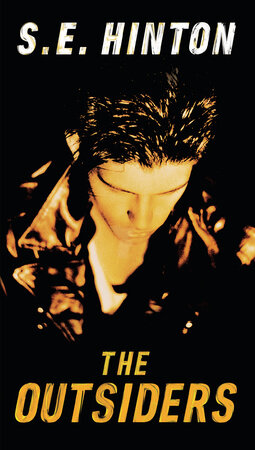
Match the file to Hinton’s novel
The library record gives you a specific edition to search for in your own Libby catalog. Its English EPUB is approximately 418 KB. The presence of an EPUB option does not mean that the loan is an unrestricted file: lending periods, account eligibility and compatible reading apps still apply. We did not borrow it.
The matching Kobo US edition names Speak / Penguin Young Readers Group, identifies the same 9781101642610, and lists EPUB 3 with Adobe DRM. This is a purchase page, not a direct download. In our current Singapore browsing environment, the US page directed us to shop from Singapore. Check the store for your actual country before paying; we did not test checkout or download rights in another region.
The publisher’s page also offers an opening excerpt. You can use it to decide whether Ponyboy’s voice interests you before arranging access to the whole novel. A free excerpt, a school worksheet and a PDF found through search are not interchangeable with an authorized complete edition.
Check the author, format and edition description, not just the words “The Outsiders.” A film tie-in cover can still contain the novel, while a study guide can discuss the novel without containing it. For a class, your teacher’s assigned edition may also determine page references; use chapter and scene locations when comparing different ebook layouts.
Separate a brother’s action from Ponyboy’s verdict
In the publisher’s opening excerpt, fourteen-year-old Ponyboy walks home from a movie and is attacked. His brothers and friends come to his aid. Darry, his twenty-year-old brother, shakes him while checking whether he is hurt, stops when asked and apologizes. Ponyboy then doubts the apology. Those are adjacent pieces of writing, but they are different kinds of evidence: an action, spoken words and an interpretation.
Try reading that exchange twice. On the first pass, follow Ponyboy’s fear and relief. On the second, underline only what Darry does or says. What would you infer from those details if Ponyboy had not supplied his judgment? You do not have to decide that either brother is wholly right. The gap is worth keeping open.
Use a two-line note rather than a full character chart:
- What happened in this exchange? Keep the description short enough that another reader could locate it.
- What does Ponyboy think it means? Add your own alternative only if the scene supports one.
Revise the note when a later scene gives you more information. This keeps a first impression provisional without turning the reading into a hunt for a hidden “correct” personality. It also gives a discussion something firmer than “I like him” or “he is mean.”
Keep Darry and Dally separate as you read: Darry is Ponyboy’s brother; Dally is Dallas Winston. A one-letter difference is easy to miss when listening. The other brother, Sodapop, need not be squeezed into either man’s role. Add names as they enter the scene instead of opening a chart that may reveal later events.
Let the emotional response be a question, too
Virginia Ronan’s Goodreads review responds strongly to the brothers’ care for one another. Lisa of Troy’s review reports little connection with the characters. A recent November 19 response from Sara Moqdad describes a lingering emotional reaction. These are individual responses, not a vote that determines what you should feel; the full reviews may contain spoilers.
If you find the emotion persuasive, identify which particular exchange earns it. If you find it overstated, distinguish an objection to the narrator’s language from an objection to what happens. Two readers can agree about the events and disagree about the telling. The opening exercise gives both readers a passage to discuss without borrowing a review’s conclusion.
For a different group of boys, the opening assemblies in Lord of the Flies ask who gets heard and who acts on an agreement. Keep Golding’s island experiment separate from Hinton’s family and social setting; the useful comparison is how a group’s labels fit the individuals inside it.
Hear the exchange without losing the speaker
If an eligible library loan offers Kindle Book, send it to Kindle through the library’s authorized process. Once it opens in a supported Kindle web reading page, the CastReader Kindle route can help you follow accessible text after installing the appropriate extension. This route reads a page; it does not export the Kindle book or unlock a protected EPUB.
For a short passage you can lawfully copy, open the free text-to-speech reader and choose an available device voice for reading without a CastReader account. Pause at each change of speaker and check the dialogue tag. Cloud AI voices require sign-in, send text for speech generation and have plan limits. Synthetic delivery is not a substitute for the novel’s punctuation or a guarantee of different voices for each character.
Keep the protected Kobo or library EPUB in its authorized reading application. The EPUB workspace is for compatible, lawfully obtained unprotected files; it does not remove Adobe DRM, and an ACSM license is not the book itself.
Edition and access details checked November 19, 2026. No purchase, library loan, complete-book download, import or playback performed.